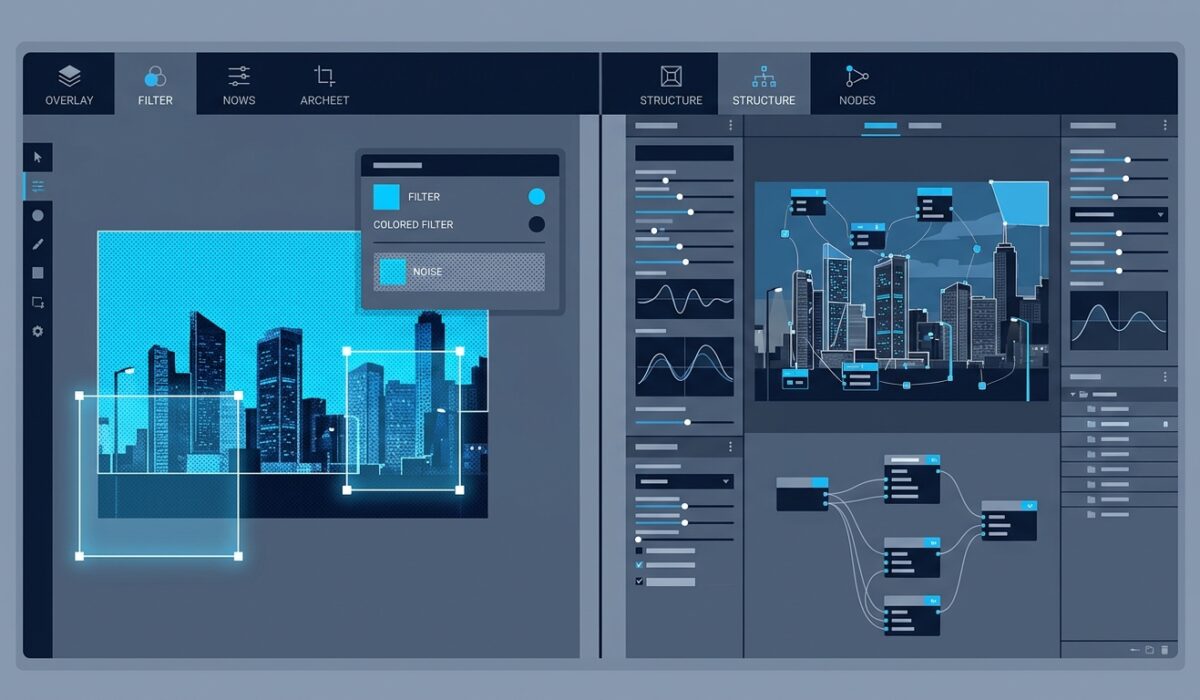
A filter takes an input and applies a fixed, predictable transformation to it. Same input, same output, every time, with no judgment about whether that transformation is actually right for this specific case. Most tools marketed as “AI editing” are, underneath the marketing, still filters in exactly this sense, however sophisticated the transformation itself has become. That’s worth being honest about, because sophistication and judgment are not the same thing.
What actually makes something a filter
A background-removal tool, a one-click clip-extension feature, an auto-caption generator, these apply the same operation to whatever they’re pointed at, regardless of whether that operation is actually what a specific piece of footage needs. This isn’t a criticism of the underlying technology, some of it is genuinely impressive. It’s an observation about the shape of the interaction: a filter doesn’t ask “should I do this here,” it just does it, uniformly, to whatever input arrives.
What actually makes something an editor
A real editor, human or genuinely agentic, makes a judgment call specific to the context in front of them. The same technical operation, tightening a section’s pacing, for instance, might be exactly right for one video and completely wrong for another with a different intended rhythm. An editor’s actual value isn’t executing the operation, tightening pacing isn’t hard, it’s knowing whether this specific moment in this specific project needs it. A filter has no basis for that judgment, it only knows how to perform the operation, not when it should or shouldn’t apply.
Why sophistication doesn’t automatically cross this line
A tool can have a remarkably advanced underlying model and still be architecturally a filter, if the actual interaction is still “apply operation X to input Y” without any genuine reasoning about whether X serves this particular project’s actual goals. A more convincing auto-caption or a more natural-sounding voice clone is a better filter, a more technically impressive one, but it’s still fundamentally the same shape of interaction: fixed transformation, uniformly applied, no contextual judgment involved. The sophistication is real. It’s just not the thing that separates a filter from an editor.
What genuinely crosses into editor territory
The actual distinction is whether a system reasons about a project’s specific context, its established characters, its intended tone, its particular pacing needs, and decides whether and how a change should apply here specifically, rather than applying a fixed operation regardless of context. This requires holding project-wide understanding, not just executing a technical transformation well, which is a meaningfully higher bar than most tools currently marketed as “AI editing” actually clear, whatever their feature list claims.
Being honest about where most tools actually sit
It’s worth resisting the temptation to call every AI feature “agentic” just because it’s technically capable. Most of what exists today, including plenty of genuinely useful tools, is closer to a sophisticated filter than a genuine editor: good at applying a specific transformation well, not yet reasoning about whether that transformation is actually the right call for a specific project. That’s not a failure, a good filter is still useful. But it’s a different thing from a system that can edit videos with AI in the fuller sense, weighing whether a change actually serves the specific project in front of it rather than uniformly applying an operation to whatever’s handed to it.
Conclusion
The difference between a filter and an editor was never about how impressive the underlying transformation is, it’s about whether there’s genuine judgment involved in deciding when and whether to apply it. Most tools calling themselves AI editors are still, honestly, sophisticated filters, technically capable of a specific operation but not actually reasoning about whether that operation serves this particular project. Crossing that line requires project-wide contextual understanding, not just a better transformation, and it’s a genuinely higher bar than most of what’s currently on the market has actually cleared.