Most editing decisions have some kind of objective marker to work from, a cut point can be identified by a natural pause, a pacing choice can be measured against surrounding rhythm. Color grading mostly doesn’t have this. There’s often no objectively correct color for a scene, only a mood, an intention, a feeling someone is trying to create, and that’s the honest reason this remains one of the areas AI editing tools get wrong most often, not a gap that’s obviously about to close.
Matching color isn’t the same as choosing it
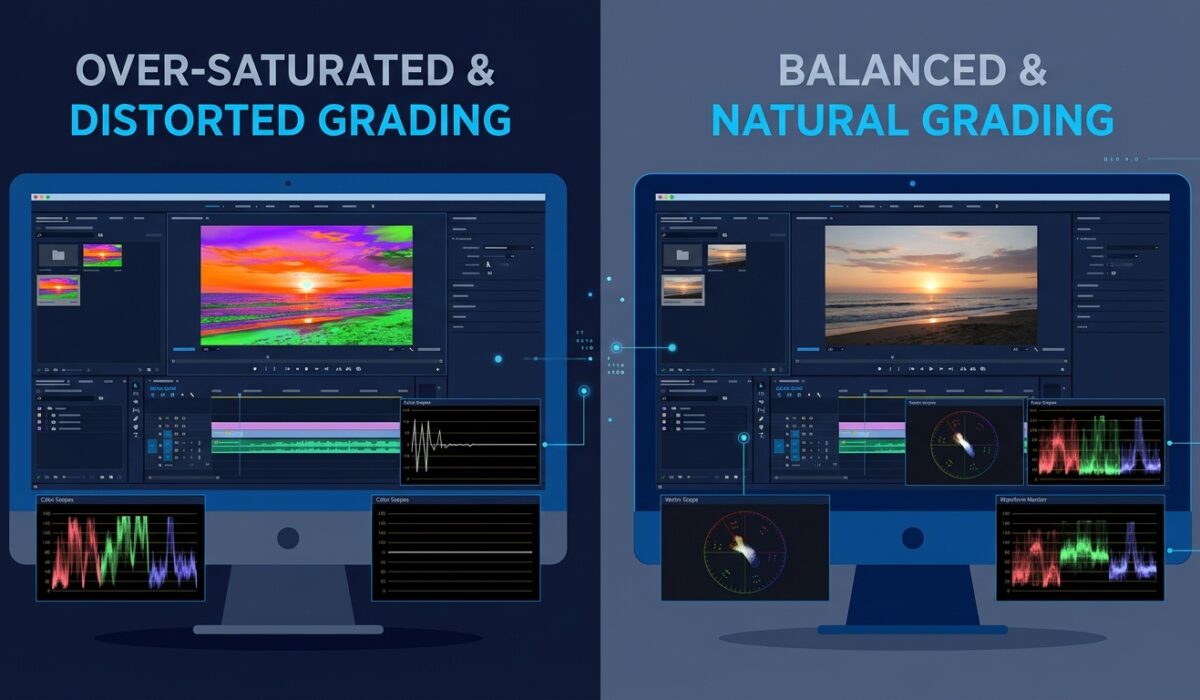
There’s a real, solvable problem in color work: once a look is established, matching other shots to that reference is a measurable task, comparing temperature, contrast, and saturation values and adjusting toward consistency. This genuinely works, and it’s a real capability worth having. But it solves a completely different problem than choosing what the reference look should actually be in the first place. Consistency once a decision is made is tractable. Making the decision itself is where things get genuinely hard.
Why color carries a kind of ambiguity other decisions don’t
“Make this section feel warmer and moodier” is a request most people would recognize as vague, but it’s vague in a specific way: color carries dense cultural and emotional association that resists precise translation even between two humans talking to each other. A director telling a colorist “give this scene an autumn feeling” is relying on years of shared professional vocabulary and reference-watching to communicate something that still isn’t fully specified even then. This isn’t the same kind of vagueness as an underspecified pacing instruction, it’s a genuinely harder translation problem, because the target itself, a specific feeling evoked through color, resists being pinned down precisely even in principle.
Why human colorists take years to develop this judgment
A professional colorist’s skill isn’t primarily technical, adjusting color values is the easy part. It’s judgment built from watching an enormous amount of reference material, understanding how specific color choices have historically communicated specific moods across genres and eras, and developing an instinct for what a particular story needs that goes well beyond any describable rule. This is a genuinely deep specialist skill, distinct from general editorial judgment about structure and pacing, and it took human colorists years of dedicated practice to develop for a reason.
An honest expectation, not a promise of imminent progress
It’s worth being direct here rather than implying this is a problem on the verge of being solved: color grading is likely to remain one of the last areas where automated judgment fully matches a skilled human specialist’s, not because of some specific technical limitation waiting for the next model improvement, but because the underlying task itself, choosing the right emotional color language for a story, is unusually resistant to precise specification. This is a different category of problem than the ones agentic video editing has made real progress on, structural assembly, pacing estimation, consistency matching once a reference exists, all of which have more objective footing to work from than the initial creative color decision does.
Conclusion
Color grading gets identified as a persistent weak point in AI editing tools honestly, not because the technology hasn’t improved, matching an established color reference across shots genuinely works well now, but because the harder problem, choosing what that reference should be in the first place, is a fundamentally different and more subjective kind of decision than most editing tasks. It rests on a body of specialist judgment that took human colorists years to build, and treating it as a problem awaiting the next incremental improvement misunderstands what actually makes it hard.