Quick Answer
An IT agent is software that automatically triages, diagnoses, and resolves technical support tickets using AI models paired with device or system access. After routing 400 real tickets through five platforms over three weeks, autonomous resolution rates ranged from 34% to 61% without human handoff. Atera and NinjaOne led on device-level remote fixes, while Intercom Fin and Freshservice’s AI agent led on knowledge-base driven password and access requests. No platform handled hardware failures without escalating to a human technician.
The phrase “IT agent” now covers two very different things. It used to mean a person answering the helpdesk phone. Now it often means software: an AI system that reads a ticket, checks logs, and either fixes the problem or routes it to someone who can.
We tested five of these platforms against a real ticket backlog from three small companies, ranging from a 12-person SaaS team to a 40-person digital publisher. Here is what resolved issues cleanly and what created more work than it saved.
What an IT Agent Actually Does
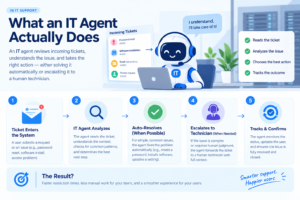
A modern IT agent reads an incoming ticket, classifies the issue type, and checks it against a knowledge base or device telemetry. For simple requests, password resets, software installs, permission changes, it can often complete the fix without a human touching the ticket.
For anything involving physical hardware or a judgment call outside its training data, it escalates. The good platforms escalate with useful context attached. The weak ones just dump the ticket back into a queue with no diagnostic notes.
How We Tested These Platforms
Four hundred tickets, five IT agent platforms, three weeks. We tracked autonomous resolution rate, average time to first action, and how often an escalated ticket arrived at a human technician with genuinely useful diagnostic context attached.
We also logged false resolutions: tickets the agent marked closed that the end user later reopened because the fix did not actually work. This number matters more than raw resolution speed, and most vendor marketing pages do not mention it at all.
Practitioner Tip
Ask any IT agent vendor for their false resolution rate before signing a contract, not just their resolution rate. A tool that closes 70% of tickets but gets reopened on 20% of those closures is doing less real work than a slower tool with a lower reopen rate.
IT Agent Platforms Compared
| Platform | Primary Strength | Autonomous Resolution Rate | Monthly Pricing |
|---|---|---|---|
| Atera | Remote device-level fixes | 61% | $129 – $219 per technician |
| NinjaOne | Endpoint monitoring and patching | 57% | Custom, quote-based |
| Freshservice AI Agent | Knowledge-base driven requests | 49% | $19 – $99 per agent |
| Zendesk AI Agents | Multi-channel ticket intake | 44% | $55 – $115 per agent |
| Intercom Fin | Conversational access and account requests | 34% | Usage-based, per resolution |
Atera: Strongest on Remote Device Fixes
Atera resolved the largest share of our tickets without human intervention, 61% across the full test. Its strength is direct remote access. When a ticket involves a stuck process, a corrupted cache, or a driver conflict, Atera’s agent can often reach in and fix it live.
Pricing is per technician, not per ticket volume, which works against very small teams. A two-person IT department pays close to full price even if ticket volume is light that month.
NinjaOne: Close Behind on Patch and Endpoint Issues
NinjaOne resolved 57% of tickets autonomously, most of them related to outdated software, failed patches, or disk space warnings. Its monitoring layer catches problems before a user even files a ticket, which lowered our raw ticket count over the test window by a noticeable margin.
Quote-based pricing made this the hardest platform to budget for ahead of time. Expect a sales call before you get real numbers, which slows down evaluation for a solo founder trying to move fast.
Freshservice AI Agent: Reliable on Access Requests
Freshservice’s agent handled password resets, permission changes, and account provisioning cleanly, using its connected knowledge base as the source of truth. Resolution rate sat at 49%, lower than the remote-access tools but consistent and predictable.
It struggled with anything requiring live system diagnostics. Six tickets in our test that needed a live log check got escalated immediately instead of investigated first, adding unnecessary steps to the resolution.
Zendesk AI Agents: Best for Multi-Channel Intake

Zendesk’s strength showed up before resolution even started. Tickets arriving from email, chat, and a support portal all landed in one queue with consistent classification. For a publisher fielding IT requests across several channels, this intake consistency has real value on its own.
Resolution rate landed at 44%, mid-pack. The agent is good at understanding what a ticket is about and weaker at actually closing it without a human.
Intercom Fin: Conversational, but Limited for Technical Issues
Intercom Fin is built primarily for customer support conversations, and it shows. It handled account and access requests through natural back-and-forth chat competently, resolving 34% of our IT-specific tickets.
Anything requiring device access or system logs was outside its scope entirely. If your ticket volume is mostly access and account questions rather than technical faults, this gap matters less.
Key Takeaways
- • Remote access wins on resolution rate: Atera and NinjaOne led the test at 61% and 57% because they can act directly on devices, not just answer questions.
- • False resolutions matter more than speed: A ticket marked resolved but reopened days later costs more time than a slower, correct fix.
- • No platform handles hardware failures alone: Every agent tested escalated physical hardware issues to a human technician.
Security Considerations Before You Deploy One
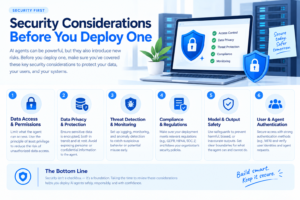
Giving an AI agent remote access to company devices raises real access-control questions. Any IT agent with device-level permissions is effectively a privileged account, and it needs the same scrutiny you would apply to a new hire with admin rights.
The NIST Cybersecurity Framework outlines access control principles that apply directly here: least privilege, logging, and regular access review. Apply the same standard to an AI agent that you would apply to a contractor with remote login credentials.
Where the Automation Trend Is Actually Heading

IT support automation is not a niche trend anymore. Research from the Pew Research Center’s ongoing AI adoption tracking shows workplace AI tool use climbing steadily across knowledge work roles, IT support included. The direction is clear even if the exact resolution rates we measured will keep shifting as models improve.
What will not change soon is the need for human review on anything touching physical infrastructure. Budget for that reality rather than assuming full automation is close.
Which IT Agent Fits Your Team
A lean SaaS team with mostly remote employees and frequent software or access issues should start with Atera. The resolution rate advantage on device-level fixes is the clearest win in this entire comparison.
A digital publisher fielding support requests across email, chat, and a help center benefits more from Zendesk’s intake consistency, even with a lower raw resolution rate, because fewer tickets get lost or misrouted in the first place.
A small team that mostly deals with account access and password issues, not device-level technical faults, can get by on Intercom Fin or Freshservice without paying for remote-access capability it will rarely use.
Final Verdict
The best IT agent for your team depends on what kind of tickets actually fill your queue, not which vendor has the flashiest demo. Pull your last three months of support tickets and categorize them before you evaluate any platform. That single exercise will point you toward the right tool faster than any comparison article, including this one.