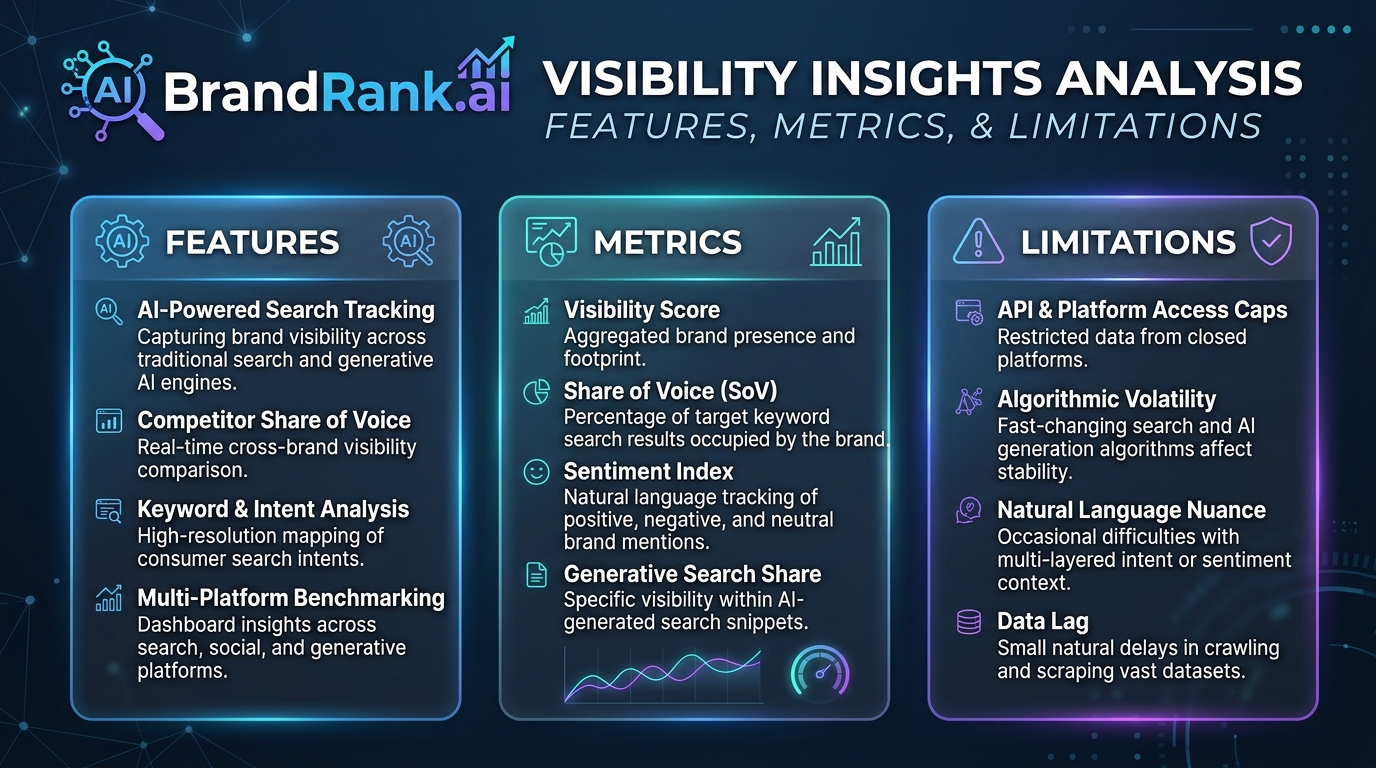
A brand can have a strong website, publish useful articles, and earn mentions across respected publications, yet still appear inconsistently in AI-generated answers. One platform may use its full business name, another may mention an abbreviated version, and a third may associate the company with outdated information. These differences make brand visibility harder to measure accurately.
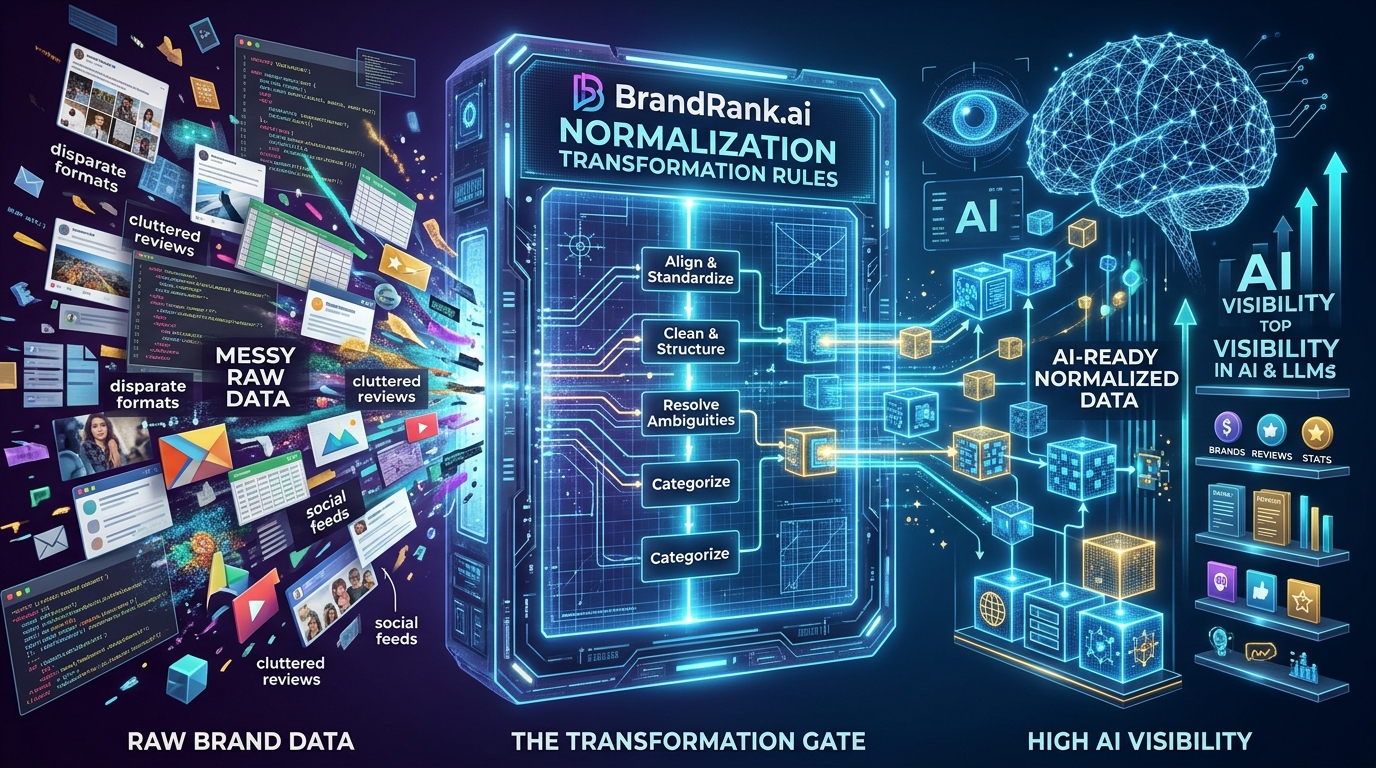
The phrase “BrandRank.ai Normalization Transformation Rules” relates to an important data question: how can different representations of a brand be organized into a consistent, usable record?
There is an important distinction at the outset. Publicly available BrandRank.AI materials do not establish a technical specification under this exact name. The phrase is best understood as a way to discuss general brand-data normalization and transformation practices in the context of AI search visibility, rather than a verified set of proprietary BrandRank.AI rules.
For independent publishers, SaaS companies, and digital marketers, understanding these practices helps explain why accurate business information matters when monitoring how AI systems describe a brand.
Quick Answer: What Are BrandRank.ai Normalization Transformation Rules?
BrandRank.ai normalization transformation rules can be understood as a descriptive term for the processes used to standardize brand information before analysis. Normalization makes equivalent data consistent, while transformation converts that information into a format suitable for reporting, comparison, or further processing. For example, a company name written with different capitalization, punctuation, or abbreviations may need to map to one verified brand identity. Related checks can distinguish a parent company from its products, remove duplicate mentions, and preserve the context of each reference. However, BrandRank.AI has not publicly established a technical framework under this exact name in the materials reviewed for this article. Businesses should treat these examples as general data-management practices, not confirmed internal platform rules.
Key Takeaways
-
Normalization improves consistency: Different versions of the same verified brand name can be mapped to a preferred name while retaining useful aliases.
-
Transformation prepares data for analysis: Raw mentions and source records can be organized into consistent fields for comparison and reporting.
-
Context matters: Similar names do not always refer to the same company, product, or location.
-
AI visibility requires accurate information: Clear, consistent business details help people and information systems understand what an organization does.
-
Proprietary claims require evidence: No specific BrandRank.AI normalization formula, threshold, or internal transformation sequence should be presented as official without supporting documentation.
What Is BrandRank.AI?
BrandRank.AI is a platform focused on understanding how brands appear in AI-generated answers. Its publicly described capabilities relate to AI search visibility, brand vulnerability, content readiness, and the way brands are represented in AI-driven discovery.
For businesses, this type of monitoring addresses a different question from traditional keyword tracking. A conventional SEO report may show whether a page ranks for a target query. AI visibility analysis examines how a brand appears in answers to relevant questions, whether it is recommended, and how its representation compares with competitors.
That distinction matters to publishers and SaaS founders. A company may rank well for its name but remain absent from answers to broader questions about products, services, or solutions.
Brand monitoring can help identify those gaps. However, the results depend on the prompts tested, the AI platforms included, the sources available to those platforms, and the method used to classify each answer.
The name of a monitoring platform does not, by itself, establish how its internal data-processing system works. Any claim about a proprietary algorithm needs documentation from the company or another reliable source.
What Does Brand Data Normalization Mean?
Brand data normalization is the process of making inconsistent records consistent enough for reliable analysis. The goal is to recognize when different values refer to the same verified entity without erasing distinctions that matter.
Consider a fictional software company called Northstar Analytics. Its name appears across the web in several forms:
-
Northstar Analytics
-
Northstar Analytics Inc.
-
NORTHSTAR ANALYTICS
-
Northstar Analytics Software
-
northstaranalytics.example
A person might recognize these references as related. A data-processing system needs a defined method to decide whether each record refers to the company, a product, or its website.
A normalization process might store the verified company name as the preferred label and retain confirmed alternatives in an alias list. It should not automatically assume that every similar name belongs to the same organization.
That last point is essential. Two businesses can share similar names while operating in different industries or countries. Incorrectly merging them can produce misleading reports and inaccurate conclusions.
Common Types of Brand Normalization
1. Capitalization and punctuation
A system may standardize capitalization and harmless punctuation differences for matching purposes. It should preserve the original text separately when exact wording matters.
2. Name variants and aliases
Verified abbreviations, former names, and common alternative spellings can be associated with one brand record. An alias should be added only when there is sufficient evidence that it refers to the same entity.
3. Domain and URL consistency
A company may have a main domain, a documentation subdomain, and a product website. These should be associated with the right organization rather than treated as interchangeable by default.
4. Language and regional variations
A brand may use different official names in different markets. A useful data model preserves these distinctions instead of forcing every name into a single English-language label.
5. Duplicate record detection
The same article or brand mention may enter a dataset more than once through different feeds. Duplicate detection helps prevent repeated records from inflating mention counts.
Normalization vs. Transformation: What Is the Difference?
The two terms are closely related, but they describe different tasks.
Normalization standardizes values. Transformation changes data into a structure or representation required by a later process.
| Criterion | Normalization | Transformation |
|---|---|---|
| Main purpose | Improve consistency | Prepare data for another task |
| Typical input | Inconsistent brand names | Raw records or normalized data |
| Example | Map a verified abbreviation to a preferred name | Convert a mention into a structured record |
| Common operations | Case handling, alias mapping, duplicate checks | Field mapping, classification, format conversion |
| Main risk | Incorrectly merging separate entities | Losing context or misclassifying information |
| Quality check | Confirm that the identity match is correct | Confirm that the output preserves meaning |
Imagine a monitoring report contains this sentence: “Northstar Analytics is a useful option for small software teams.”
Normalization identifies the company reference and links it to the correct brand record. Transformation might then store the mention, source URL, date, surrounding text, and relevant topic in separate fields.
A later analysis could determine whether the reference was positive, neutral, or negative. That classification is a separate analytical step, and it should not be confused with normalization itself.
How Brand Data Processing Can Support AI Visibility Analysis
AI visibility reports can contain data from multiple prompts, platforms, websites, and dates. The results are difficult to compare when each source represents the same brand differently.
Step 1: Collect Brand Mentions
Start with records from the sources you are authorized to monitor. Depending on the project, these might include AI-generated answers, public web pages, company profiles, product documentation, and editorial coverage.
Store the original response or text, the source, the retrieval date, and the prompt or query where applicable. These details provide context for later checks.
A brand name alone is not enough. Without the surrounding sentence, a reviewer may struggle to distinguish a product mention from a company mention or an unrelated business with a similar name.
Step 2: Resolve the Correct Entity
Create a verified record for each organization, product, and relevant subsidiary. Include the official name, known aliases, domain, and other identifying details where appropriate.
For ambiguous matches, retain a review status instead of forcing an automated decision. A confidence score can help prioritize manual review, but any threshold should be established and tested for the specific dataset.
Step 3: Standardize Fields
Use consistent formats for fields such as dates, URLs, brand identifiers, and source types.
For example, a reporting system might store the original URL and a separately normalized URL for comparison. This allows it to detect repeated references while preserving the source needed for verification.
Do not strip query parameters or merge URLs indiscriminately. Parameters can identify different pages or campaigns, and some URLs point to genuinely distinct resources.
Step 4: Classify the Context
Determine what the mention actually says about the brand.
A reference might recommend the company, criticize its service, mention it neutrally, or discuss it as a competitor. It may also contain inaccurate product claims.
Automated classification can help organize large datasets, but ambiguous or consequential claims deserve human review. Sentiment alone cannot establish factual accuracy.
Step 5: Build Comparable Reports
Once the records are standardized and classified, compare results across relevant prompts, dates, and platforms.
A report might show the percentage of tested answers that mention a brand, the frequency of recommendations, the number of unique source URLs, or the share of answers that describe a product accurately.
Each metric needs a clear definition. A brand mentioned five times in one answer should not necessarily count as five independent appearances.
Step 6: Check the Results Against Original Sources
Every important finding should be traceable to its underlying evidence. If a dashboard says a company was recommended, the analyst should be able to review the answer and confirm that the wording supports that interpretation.
This final check protects against errors introduced by matching, duplicate removal, or automated classification.
A Practical Example: Cleaning an AI Visibility Dataset
Suppose a SaaS company wants to understand how AI assistants describe its product. The following example is hypothetical and illustrates a general data workflow. It does not describe BrandRank.AI’s internal implementation.
In-Content Image 1 Placement: A clean editorial illustration of several differently formatted company names being matched to a single verified brand record, while distinct products remain separate.
The company collects 100 answers to questions about its product category. Some answers use the official brand name, others use an abbreviation, and a few mention a similarly named competitor.
Before cleaning, the team counts 68 answers as brand mentions. A review then identifies four duplicate records and six mentions that refer to a different entity.
After removing the duplicate records and correcting the identity matches, the team has 90 distinct answers for the reporting period. Of those, 58 contain a verified mention of the company.
The original figure of 68 out of 100 would have suggested a 68% mention rate, but it was based on an inconsistent dataset. The revised figure is more defensible because the team has documented its matching and deduplication decisions.
Neither number proves that the brand’s overall AI visibility has improved or declined. That conclusion requires comparable samples, consistent prompts, and repeated measurements over time.
The example also illustrates why a lower reported figure is not necessarily bad news. Correcting false matches can reduce a metric while improving the accuracy of the underlying report.
Which Metrics Should Digital Publishers Track?
Normalization is only useful when the resulting data answers a meaningful business question. Publishers and SaaS teams should choose metrics based on their goals rather than collecting every available number.
| Metric | What It Measures | Main Limitation |
|---|---|---|
| Brand mention rate | Share of tested answers that mention the brand | Does not measure recommendation quality |
| Recommendation rate | Share of relevant answers that recommend the brand | Depends on a consistent definition of recommendation |
| Entity match accuracy | How often records are linked to the correct brand | Requires verified reference data |
| Source diversity | Number of distinct sources associated with mentions | Many sources do not automatically mean strong authority |
| Factual accuracy | Whether descriptions match verified product information | Requires source checks and clear criteria |
| Competitor share | Relative appearances or recommendations among selected brands | Depends on the competitor set and test prompts |
| Duplicate rate | Portion of records that repeat the same underlying item | Different URLs may still contain genuinely distinct evidence |
How to Make These Metrics Reliable
First, define the denominator. A mention rate based on 90 unique answers is different from a rate based on 100 individual mentions.
Second, keep the prompt set stable when comparing periods. If one month tests questions about enterprise software and the next tests questions about budget tools, a change in visibility may reflect the sample rather than a change in brand recognition.
Third, record when the test took place and which platform produced the answer. AI responses can vary across runs, so one observation should not be treated as a permanent result.
Finally, preserve the raw records. A dashboard is useful for quick decisions, but original answers and source URLs allow the team to investigate unexpected changes.
BrandRank.ai Normalization Transformation Rules: What Is Publicly Confirmed?
This is the key distinction for anyone researching the keyword.
BrandRank.AI publicly describes its focus on AI search visibility and brand intelligence. However, the public materials reviewed for this article do not establish a formal technical specification called “BrandRank.ai Normalization Transformation Rules.”
That means readers should be cautious about claims that assign exact formulas, proprietary matching thresholds, fixed processing stages, or secret ranking weights to this phrase.
There is a meaningful difference between explaining how a typical data-processing workflow could work and claiming that a named company uses that precise workflow. The former can be supported by established data-management principles. The latter needs evidence from the company.
For accurate research, consult the official BrandRank.AI website and its published product information. If a vendor provides a technical specification, look for the version date, the fields it covers, its stated limitations, and the method used to validate results.
Do not treat a third-party article’s detailed explanation as proof of a private algorithm merely because it uses the company’s name.
How Clean Brand Data Connects With Google AI Overviews
Google’s AI search features use existing Search systems and other mechanisms to identify relevant information. Website owners should continue to follow established SEO practices rather than assume a separate brand-normalization trick guarantees inclusion.
Google’s official guidance on AI features in Search explains how its AI search experiences relate to the broader Search ecosystem. Its recommendations emphasize useful content and established technical practices, not a special formula for securing citations.
For a business website, practical steps include:
-
Use the same verified business name across important pages and profiles where appropriate.
-
Keep product descriptions, company details, and contact information accurate.
-
Explain what a product does, who it is for, and what evidence supports its claims.
-
Publish original material that answers real questions from potential customers.
-
Maintain descriptive page titles and clear headings.
-
Link related pages in ways that help readers understand the relationship between products, services, and supporting information.
-
Review outdated claims and correct errors at their source.
Structured data can also help search engines interpret supported information about a page. However, structured data must accurately represent visible page content, and it does not guarantee a particular search appearance.
See Google’s structured data guidelines for the relevant requirements.
A business should not add misleading claims or manufacture third-party mentions simply to influence AI answers. Accurate, useful information gives readers a sound basis for evaluating the company, whether they discover it through a traditional search result or an AI-generated response.
Common Mistakes That Reduce Brand Data Quality
Even a well-designed reporting system can produce misleading results if the underlying data is poor. These are some of the most common problems to watch for.
Treating Similar Names as the Same Brand
A short name may refer to several organizations. Matching based on spelling alone can merge unrelated businesses and distort mention counts.
Use supporting evidence such as an official domain, product description, or verified company profile. Send uncertain matches for manual review.
Removing Too Much Information
Over-normalization can erase meaningful distinctions. For example, a software company and its flagship product may share a name but require separate records for accurate reporting.
Keep the original value alongside the standardized value. This makes it easier to trace a decision and correct an incorrect match.
Counting Duplicate Mentions as Independent Evidence
A single article can appear in multiple feeds or be referenced more than once in an answer. Counting every occurrence as an independent source can exaggerate a brand’s reach.
Track both total mentions and distinct underlying sources. State which measure a report uses.
Treating Sentiment as Proof of Accuracy
A positive description can still contain incorrect pricing or product details. A negative statement can also be factually accurate.
Measure sentiment and factual accuracy separately. Compare claims about pricing, availability, features, and company identity with current primary sources.
Assuming One Test Represents Every AI Platform
Different AI assistants can produce different answers to the same question. Their results can also change over time.
Use a consistent test set, repeat important queries, and report the dates and platforms involved. This creates a more useful basis for comparison than relying on a single screenshot or response.
A Recommended Workflow for Publishers and SaaS Teams
A small business does not need an elaborate data platform to begin improving its brand records. A spreadsheet can be enough for an initial audit.
In-Content Image 2 Placement: Infographic showing a six-stage workflow: collect source data, identify entities, normalize names, transform records, validate claims, and report AI visibility. Use clear arrows and minimal labels.
Start with a master brand record containing the official name, website, product names, verified aliases, and a source for each important fact.
Next, collect a sample of relevant brand mentions. Record the original text, source URL, date, platform, and query. Normalize only the fields that need consistent comparison, and retain the original data for verification.
Then classify each record. Distinguish company mentions from product mentions, recommendations from neutral references, and confirmed matches from uncertain ones.
Before publishing a report, inspect a sample of the processed records manually. Measure the rate of incorrect matches and duplicated entries, then adjust the workflow where necessary.
Finally, document the rules. If a team member changes the alias list, matching criteria, or duplicate-removal process, record the change and its date. Otherwise, a report may show a sudden change caused by a new data rule rather than a genuine change in brand visibility.
Practitioner Tip: Keep an Audit Trail
Do not overwrite raw brand mentions with cleaned values. Store the original name, normalized name, matched entity ID, source URL, match status, and processing date as separate fields.
This makes it possible to investigate a suspicious result without collecting the same data again. It also helps teams explain why a metric changed after a correction.
For small teams, a simple spreadsheet with these columns can provide a useful starting point. Larger projects may require a database, automated matching, and a review queue for ambiguous records.
Any matching threshold or performance benchmark should be measured against a verified sample before it is used in production. There is no universal threshold that works equally well for every industry, naming convention, or dataset.
Final Thoughts
BrandRank.ai normalization transformation rules is a useful search phrase for understanding how consistent brand data relates to AI visibility reporting. The underlying practices are practical: standardize verified names, preserve aliases, distinguish separate entities, remove duplicate records carefully, and validate claims against their sources.
The important limitation is that these practices should not be presented as BrandRank.AI’s proprietary framework without official evidence. A reliable analysis separates documented platform capabilities from general data-management methods.
Frequently Asked Questions
What are BrandRank.ai normalization transformation rules?
The phrase describes general practices for standardizing brand information and converting it into a format suitable for analysis. No official technical specification under this exact name was established in the public materials reviewed for this article.
Are BrandRank.ai normalization rules an official product feature?
The exact named framework is not verified by the public documentation reviewed here. Readers should consult BrandRank.AI’s official materials for confirmation before attributing a specific algorithm or set of rules to the company.
Why does brand normalization matter for AI search?
Normalization helps reporting systems identify consistent references to a brand across different sources. It can improve mention counts and comparisons when implemented carefully, although it does not guarantee that an AI assistant will mention or recommend the brand.
Does brand normalization improve Google rankings directly?
There is no established basis for claiming that normalization alone directly improves rankings. Accurate business information and clear website content can support sound information management, but rankings depend on many factors.
Should every brand mention be converted to one name?
No. Use a preferred name for verified matches, but preserve aliases and original wording. Different products, subsidiaries, and similarly named organizations may need separate records.
How can a business check its AI visibility?
Create a repeatable set of relevant questions, test them across the AI platforms that matter to the business, and record mentions, recommendations, factual accuracy, and cited sources. Repeat the tests over time and compare equivalent samples.
What tools are needed to normalize brand data?
A spreadsheet is sufficient for a small audit. Larger datasets may benefit from a database, text-processing scripts, entity-matching tools, and manual review. The right setup depends on data volume, accuracy requirements, and budget.