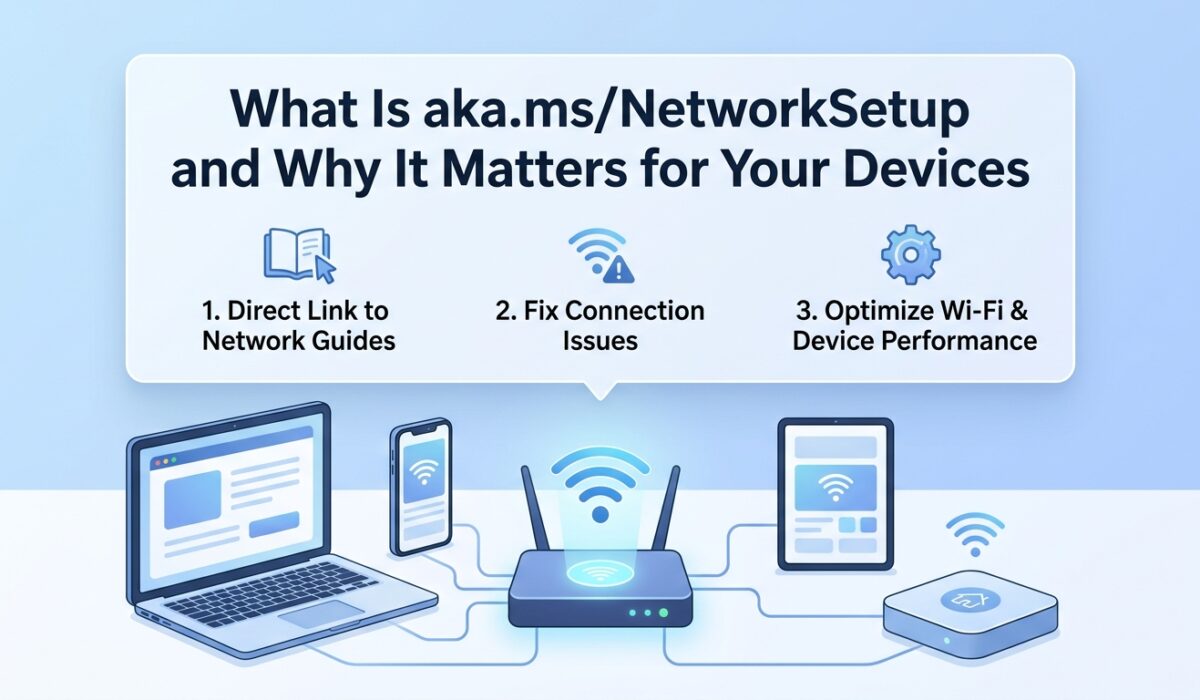
If you’ve ever set up a new Xbox, Windows PC, or Microsoft Surface device, chances are you’ve run into a short link that starts with aka.ms. One of the more common ones floating around forums and support tickets is aka.ms/networksetup. It looks small, almost forgettable, but it plays a real role in how Microsoft routes users toward network configuration tools during device setup or troubleshooting.
This article breaks down what this link actually does, why Microsoft uses this kind of URL shortener system, how it compares to manual network troubleshooting, and what independent creators, SaaS founders, and digital publishers should know if they’re writing about or referencing it.
Quick Answer:
aka.ms/networksetup is part of Microsoft’s internal URL redirection system (aka.ms), used to send users directly to network configuration or troubleshooting pages, most often tied to Xbox consoles or Windows network setup wizards. It saves users from typing long support URLs and lets Microsoft update the destination page without changing the link itself. For everyday users, it functions as a shortcut. For IT professionals, it’s a predictable, trackable redirect used in support documentation and onboarding flows.
What aka.ms Actually Is
Microsoft’s aka.ms domain is a first-party link shortener, similar in concept to bit.ly but run entirely in-house. Microsoft uses it across nearly every product line: Windows, Xbox, Office, Azure, and Teams all lean on aka.ms links inside error messages, setup screens, and support articles.
The reason is simple. A raw support URL might look like a 150-character mess full of tracking parameters and folder paths. Nobody wants to type that on a game console using a controller. So Microsoft compresses it into something short and memorable, then points that short link at whatever the real destination happens to be.
This matters because the destination behind an aka.ms link can change over time without the link itself changing. Microsoft can update, redesign, or relocate a support page, and the short link keeps working because it’s just a pointer, not the page itself.
Where networksetup Fits In
The “/networksetup” portion is the specific slug tied to network configuration content. On Xbox consoles, this typically surfaces during initial setup or when the console detects a connectivity problem. Instead of forcing you to navigate through several settings menus, the system displays a short code you can visit on a phone or computer, and it lands you on a page walking through wired versus wireless setup, DNS issues, or router compatibility.
On the Windows side, similar aka.ms links appear inside the Settings app, particularly under Network and Internet troubleshooting, and inside error dialogs when a PC can’t reach the internet.
If you’re a support writer, community moderator, or SaaS founder building internal documentation that references Microsoft’s ecosystem, it helps to know this pattern exists. You’ll see the same structure across dozens of Microsoft products: a short aka.ms link, a redirect, and a live support page that Microsoft can update independently.
Manual Setup vs Using the Redirect Link

Some users skip the aka.ms link entirely and just dig through settings manually. Both routes get you to the same place, but they differ in speed and reliability, especially depending on the device you’re troubleshooting from.
| Method | Speed | Best For | Common Pitfall |
|---|---|---|---|
| aka.ms/networksetup link | Fast, guided | Console users, beginners | Link can be mistyped on a controller |
| Manual OS settings | Slower, more steps | Power users, IT admins | Menu paths change between OS versions |
| Router admin panel | Moderate | Diagnosing DNS/IP conflicts | Requires knowing router login credentials |
| ISP support line | Slow | Hardware-level outages | Long wait times, generic scripts |
In practice, the redirect link wins for anyone who just wants the fastest path to a working connection without digging through nested settings menus. Manual navigation is better suited to people who already understand networking basics and want granular control, like setting a static IP or changing DNS servers manually.
Real Trade-offs Worth Knowing
Having actually walked through Xbox and Windows network troubleshooting flows more than once, a few things stand out that rarely get mentioned in official documentation.
First, aka.ms links are not permanent guarantees of content. Microsoft occasionally restructures support pages, and a link that worked last year might redirect somewhere slightly different today. If you’re citing this link in a tutorial or SaaS onboarding guide, it’s worth checking the destination periodically rather than assuming it’s frozen in place.
Second, these short links don’t work well when typed manually on some older console keyboards. A single mistyped character sends you to a 404 page instead of the setup wizard. This trips up more users than you’d expect, especially older users unfamiliar with typing URLs using a joystick-style on-screen keyboard.
Third, network setup pages behind these links often assume you already know your router model and firmware version. If you don’t, the troubleshooting steps can feel generic. Pairing the Microsoft page with your router manufacturer’s own support documentation usually closes that gap faster than sticking to Microsoft’s page alone.
Practitioner Tip:
When documenting Microsoft short links for a support site or knowledge base, always pair the aka.ms link with a plain-text description of where it leads. If the redirect target changes, your readers still know what to search for instead of hitting a dead end.
Why This Matters for Independent Creators and SaaS Founders

If you run a tech blog, a SaaS product with onboarding docs, or a community support forum, understanding how Microsoft structures these links helps in two ways.
First, it helps you write more accurate troubleshooting content. Instead of guessing what a user experiences when they visit aka.ms/networksetup, you can describe the actual flow: device detects a connectivity issue, displays a short code, user visits it from another device, lands on a guided setup or troubleshooting page.
Second, it’s a useful pattern to borrow. Many SaaS products now run their own short-link systems for onboarding flows, precisely because it lets support and product teams update destination content without breaking links embedded in error messages, emails, or printed materials. Microsoft’s approach with aka.ms is one of the more mature examples of this at scale, and it’s part of a broader shift toward standardized web practices documented by organizations like the <a href=”https://www.w3.org/” rel=”nofollow” target=”_blank”>World Wide Web Consortium</a>, which sets guidelines around URL structure and web accessibility that many enterprise systems follow.
Search behavior also plays a role here. Google’s own guidance on <a href=”https://developers.google.com/search/docs/fundamentals/seo-starter-guide” rel=”nofollow” target=”_blank”>Google Search Central’s SEO documentation</a> emphasizes that redirect chains and link structures affect how content gets indexed and surfaced, which is relevant if your own product uses a similar short-link redirect system for onboarding or support.
Key Takeaways
- aka.ms/networksetup is a Microsoft-owned redirect link, not a standalone webpage, and it points to network configuration or troubleshooting content depending on the device.
- The destination behind the link can change without the link itself changing, so periodic verification matters for anyone citing it in written content.
- Manual network troubleshooting through OS settings gives more control but takes longer than following the guided redirect flow.
Common Questions
Is aka.ms/networksetup safe to visit?
Yes. Since aka.ms is Microsoft’s own domain, links under it redirect to Microsoft-owned or Microsoft-approved destinations. It’s not a third-party shortener, which reduces the usual risk associated with unknown short links.
Why does Xbox show a short link instead of just fixing the connection automatically?
Some network issues, like router compatibility or ISP-level blocks, can’t be resolved from the console alone. The short link exists so users can troubleshoot from a device with a full keyboard and browser instead of struggling through an on-screen keyboard.
Does this link work the same way on every Microsoft product?
The domain structure is consistent, but the destination content is tailored to whichever product triggered the link, whether that’s Xbox, Windows, or another Microsoft service.
Final Verdict
aka.ms/networksetup is a small but genuinely useful piece of Microsoft’s support infrastructure. It’s not flashy, and it won’t show up in marketing material, but it solves a real problem: getting users from a stuck device to a working troubleshooting page without forcing them to type long URLs or dig through settings menus blind.
For everyday users, it’s worth bookmarking if you regularly manage Xbox or Windows devices on a shared network. For creators, founders, and documentation writers, it’s a solid example of how a simple redirect system, done right, can outlast constant backend changes without breaking the user experience. If you’re building something similar for your own product, Microsoft’s approach here is a reasonable one to study.