Quick Answer
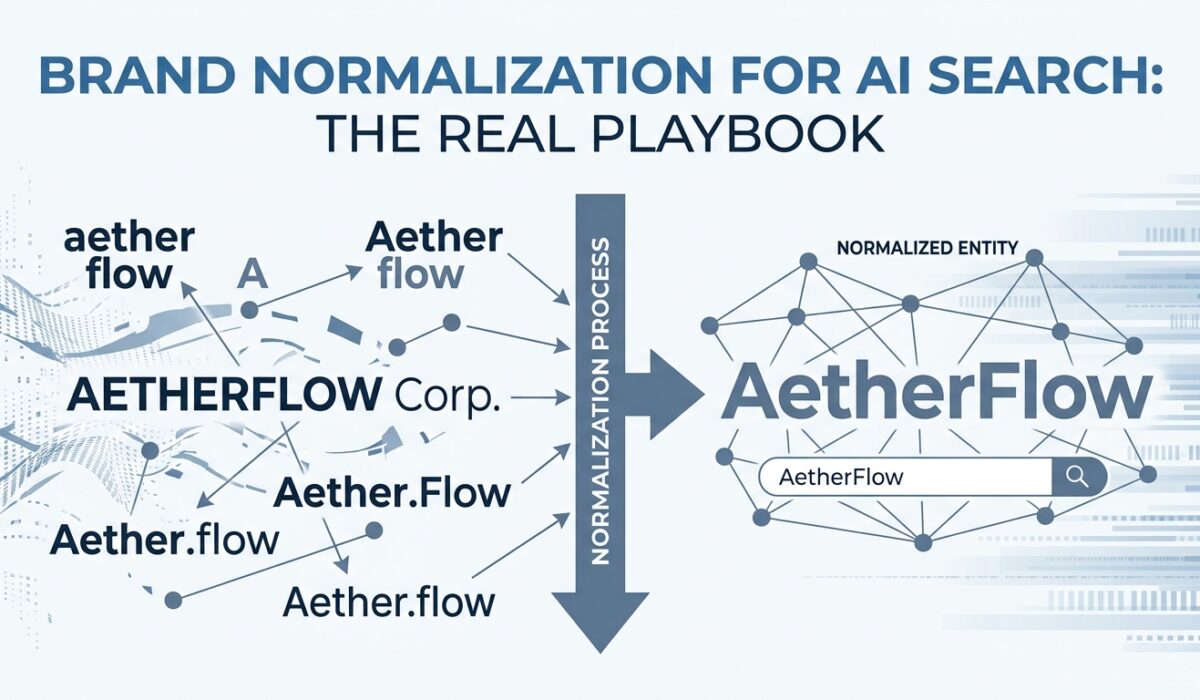
“BrandRank.ai normalization transformation rules” is not a published technical specification from a single documented tool. It’s a phrase circulating in AI search optimization discussions, describing the practice of standardizing how a brand name, entity, and structured data appear across a website, social profiles, and directories so AI systems treat every mention as the same entity rather than several unrelated ones. The underlying method draws from established data practices: normalization (matching formats internally), standardization (publishing one consistent public style), and canonicalization (assigning one authoritative record per entity). For independent creators and SaaS founders, applying these principles matters more than chasing the specific named tool, since AI search engines increasingly rank on entity consistency, not just keywords.
Key Takeaways
- The term describes a practice, not a confirmed product spec. No independently verifiable, publicly documented BrandRank.ai rule set exists as a formal standard, so treat the phrase as shorthand for entity normalization best practices, not gospel from a named vendor.
- Three distinct steps matter more than the label. Normalize internally (strip punctuation, legal suffixes, casing differences), standardize what you publish (one consistent brand string everywhere), and canonicalize with a single authoritative ID tying every variant together.
- Inconsistent brand mentions fragment AI recognition. If your name appears as “Acme Inc.”, “Acme”, and “Acme Incorporated” across different pages, AI models can treat those as separate entities instead of one trusted brand.
Snapshot: Normalization vs Standardization vs Canonicalization
- Normalization – Purpose: internal matching and deduplication. What it does: strips case, punctuation, and legal suffixes so “Acme, Inc.” and “acme” compare as equal. Where it lives: data pipelines, CRM records, backend matching logic.
- Standardization – Purpose: public consistency. What it does: locks in one documented style (“Acme”, title case, no suffix) used everywhere the brand appears publicly and internally. Where it lives: style guides, CMS templates, social bios.
- Canonicalization – Purpose: single source of truth. What it does: assigns one authoritative entity ID so every variant, “ACME LTD,” “Acme Incorporated,” “Acme”, resolves back to one record. Where it lives: knowledge graphs, structured data, entity management systems.
Most confusion around this topic comes from treating these three as interchangeable. They’re sequential. You normalize to compare, standardize to publish, and canonicalize to unify.
What’s Actually Verifiable Here
Worth being direct about this upfront: coverage of BrandRank.ai normalization transformation rules explicitly frames the phrase as associated with AI search optimization discussion rather than a documented technical specification from a named company. That’s an important distinction for anyone about to build a workflow around it. There isn’t a public rulebook with version numbers and change logs to point to.
What is real and well documented is the broader discipline this phrase borrows from. Entity resolution and name normalization have existed in data management for decades, long before AI search made them trendy again. Practitioners working in SEO, revenue operations, and master data management already have a standards-aligned playbook for this, covering Unicode handling, regex patterns for name matching, and governance frameworks tied to established data quality standards. So the honest read is this: the specific named source may be more marketing shorthand than technical standard, but the practice it points to is legitimate and worth doing regardless of what you call it.
Why This Matters for AI Search Specifically

Traditional search engines rank pages. AI-driven search and answer engines increasingly rank entities, meaning they try to identify who or what a brand actually is, then pull consistent facts about that entity from wherever it appears. As AI-powered search engines change how people discover brands online, more attention is going toward entity consistency and structured digital presence rather than pure keyword density.
That shift has a practical consequence. If an AI model finds your brand name spelled three different ways across your own site, your social profiles, and a couple of directory listings, it has to decide whether those are the same entity or three separate, unrelated ones. Get that wrong often enough and your brand’s authority signals split across multiple weaker entities instead of consolidating into one strong one.
Building an Actual Rule Set
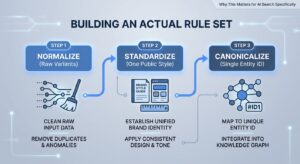
Here is what a working normalization pass looks like in practice, stripped of vendor branding.
Start with the internal matching layer. Decide how your system will compare name variants before anything gets published. That means lowercasing for comparison purposes, stripping punctuation, and standardizing legal suffixes like “Inc.”, “LLC”, and “Ltd.” into either a consistent format or removed entirely depending on your industry norms.
Lock a single public style. Pick exactly one way your brand name appears everywhere: capitalization, spacing, whether you include a legal suffix in public-facing copy. Write it down. A one-line style rule prevents a dozen future inconsistencies across landing pages, bios, and press mentions.
Assign one canonical record and stick to it. Every structured data reference, every schema markup entry, every business listing should point back to the same canonical entity, not slightly different versions created by different team members at different times.
Audit existing inconsistencies before adding new content. Pull every place your brand name currently appears, your own site, social bios, directories, guest posts, and check for drift. Fixing legacy inconsistency matters more than getting every new piece of content perfect if the old material is still what search engines and AI crawlers are indexing.
Practitioner Tip
Before touching structured data or schema markup, run a manual audit first. Search your exact brand name in quotes across Google, then check the top twenty results for spelling, punctuation, and formatting variants. You’ll almost always find at least two or three inconsistent versions you forgot existed, usually from an old directory listing or a guest post bio nobody has touched in years. Fix those before investing time in more advanced canonicalization tooling, because automated tools amplify whatever inconsistency already exists in your source data.
Trade-Offs and Practical Limits
Applying this well takes longer than it sounds. A small creator or single-founder SaaS product might have brand mentions scattered across a dozen platforms built up over years, and each one requires manual correction since most directories don’t offer bulk-edit access to outside parties.
There’s also a real risk of over-engineering this for a brand that doesn’t need it yet. If you’re a solo creator with a handful of consistent mentions across two or three platforms, building out a full canonicalization pipeline with regex matching rules is solving a problem you don’t have. Save that level of investment for when your brand mentions genuinely span dozens of sources and inconsistency is measurably hurting how AI tools represent you.
Structured data implementation also has a learning curve. Getting schema markup technically correct according to current specifications takes real testing, not guesswork, and errors in markup can do more harm than having no markup at all if search engines misread malformed data.
A Note on Sourcing Claims Like This

Anytime a phrase like this circulates with a specific brand name attached but no linkable technical documentation, treat it as a signal to verify before building process around it. For general guidance on how structured data and schema markup actually affect search visibility, Google’s own developer documentation remains the most reliable primary source rather than secondhand interpretations. For the data governance side of entity matching and normalization, standards bodies covering data management practices publish detailed frameworks worth referencing directly rather than through a single vendor’s marketing language. And for broader context on how the public perceives AI-driven brand and search systems, ongoing research from established survey organizations gives a grounded read on trust and adoption patterns, separate from any single company’s promotional claims.
The Honest Verdict
BrandRank.ai normalization transformation rules is a phrase worth understanding conceptually and worth being skeptical of as a named, documented standard. The practice underneath it, consistent entity naming, structured data alignment, and one canonical record per brand, is real, useful, and has existed under other names for years in data management circles. Apply the three-step method: normalize for internal matching, standardize what you publish, canonicalize with one authoritative record. Do that consistently across your own site and listings before worrying about whether a specific named tool’s rule set is real or aspirational.
For most independent creators and small SaaS teams, a quarterly manual audit of brand name consistency across your top twenty search results will do more for AI search visibility than adopting any single vendor’s named framework wholesale.