Quick Answer
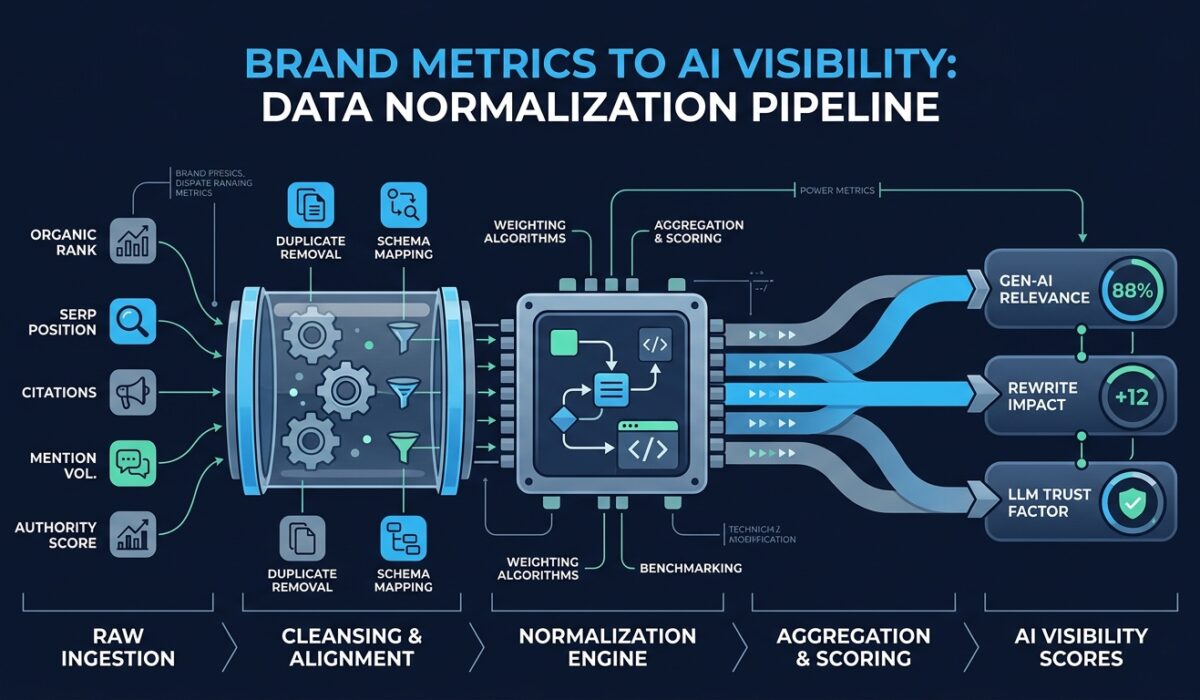
BrandRank.ai normalization transformation rules refer to the practice of cleaning and standardizing brand data (names, products, locations, and structured data) so that AI systems like ChatGPT, Gemini, and Google’s AI Overviews can identify a brand consistently and cite it correctly. It is worth being upfront about one thing before going further: this is not an official, trademarked methodology published by BrandRank.ai itself. There is no evidence that this phrase is an official BrandRank.AI product, methodology, or framework, and the company’s publicly named framework is the Brand Health and Trust framework, introduced through a May 2026 partnership with Burke, Inc. What the term does describe accurately is a real and increasingly important discipline: entity normalization for AI search visibility, sometimes bundled under the broader label of Answer Engine Optimization, or AEO.
I have spent time cleaning up brand data for clients trying to get properly recognized by AI answer engines, and the underlying practice described by this phrase is genuinely useful, even if the branding around it is a little inflated by content marketers chasing search traffic. Here is what the process actually involves, why it matters, and how to apply it without wasting a quarter chasing a framework that doesn’t formally exist.
Why This Topic Exists in the First Place

Search used to work on links and keywords. An AI answer engine works differently. It pulls from a mix of your website, directory listings, review sites, Wikipedia and Wikidata entries, press coverage, and structured data like schema markup, then tries to reconcile all of that into one confident answer about who you are and what you sell.
The problem is that most brands have never been consistent across all those sources. Your legal name might read “Northline Coffee LLC” on your invoice footer, “Northline Roasters” on Yelp, and just “Northline” in a press release from three years ago. A human reader sorts that out instinctively. A language model trying to build an internal representation of your brand does not always get it right, and when it doesn’t, it either skips you, cites a competitor instead, or states something about you that is outdated or wrong.
That gap between messy real-world brand data and the clean, structured input AI models need is exactly what normalization and transformation rules are meant to close.
Normalization Versus Transformation: The Actual Difference
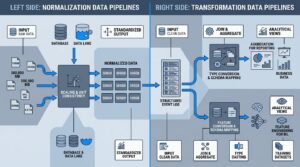
These two words get used almost interchangeably in most of the content written about this topic, but they describe two separate steps.
Normalization is about consistency. It takes different versions of the same fact and maps them to one canonical version. “BrandRank AI,” “Brand Rank,” and “brandrank.ai” all become one approved name. “123 Main St, Suite 4” and “123 Main Street, Ste. 4” become one address format.
Transformation is about structure. It takes the now-consistent data and reshapes it into a format a system can actually use, whether that is JSON-LD schema, a CSV feed, or a standardized field in a knowledge base. A sentence describing a customer interaction, for example, can be broken down into a structured record with fields for the brand mentioned, whether a citation was found, sentiment, topic, and competitor presence. That structured record is far easier for a model to reason about than a paragraph of prose.
In practice these two steps run together, and most people just say “normalization rules” as shorthand for the whole cleanup pipeline.
The Core Categories, Pulled From How the Industry Actually Uses the Term
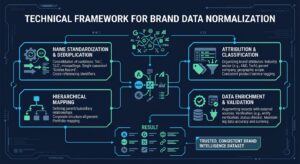
Looking across how different practitioners describe this process, the same handful of categories keep showing up. I have grouped them the way I would explain them to a client on a first call.
Brand name normalization.
One approved name, spelled and punctuated exactly the same way everywhere. This sounds trivial until you audit a mid-sized company’s footprint and find six variants of its own name across its own properties.
Product and service name normalization.
The same product should carry the same name on your site, in your PR, on marketplaces, and in review coverage. Naming drift between departments (marketing calls it one thing, the product team calls it another) is one of the most common sources of confusion here.
Category and taxonomy normalization.
Your business needs to sit inside the same industry category language that AI models already associate with your type of business, rather than a bespoke label that only makes sense internally.
Location and address normalization.
Name, address, and phone number, commonly abbreviated as NAP data, need to match exactly across every directory and listing. This is old-school local SEO hygiene, and it matters just as much for AI visibility as it ever did for Google Maps.
Structured data alignment.
Your Organization and Product schema markup needs to match what is actually visible on the page, including the sameAs property that links to your verified social profiles. A mismatch between what your schema claims and what your page shows is a red flag that gets your data discounted.
Historical and rebrand management.
If a company has renamed itself, old references need to be linked to the current name rather than left to float as an unexplained variant, and old URLs should redirect properly rather than dead-ending.
Source and citation hygiene.
Not every source that mentions a brand deserves equal trust. A verified enrichment feed or an official filing should carry more weight than a random directory submission that anyone could have typed in.
Practitioner Tip
Sequence matters more than most people expect. Strip legal suffixes like “LLC” or “Inc.” before checking capitalization, or you will end up correcting fragments instead of full names. Check a brand against a known exceptions list before applying default casing rules, or you risk turning something like “eBay” into “Ebay.” Resolve which entity a record belongs to before you touch its location data, since fixing an address on the wrong entity just moves the error rather than removing it. Get this order wrong at scale and you can quietly corrupt data that looked clean on the day you ran it.
A Practical Comparison of the Main Rule Types
| Rule Category | What It Fixes | Simple Example |
|---|---|---|
| Text standardization | Spelling, capitalization, punctuation drift | “BrandRank AI” and “brandrank.ai” mapped to one form |
| Duplicate removal | Repeated or near-identical directory listings | Two Yelp entries for the same location merged into one |
| Format standardization | Dates, phone numbers, address formats | All dates converted to ISO 8601 (YYYY-MM-DD) |
| Entity mapping | Linking aliases back to one canonical record | “Northline Coffee” and “Northline Roasters” merged |
| Metadata standardization | Title tags, schema fields | Product schema matched to the visible page title |
| Historical management | Old brand names after a rebrand | Former name redirected and cross-referenced to current one |
Why This Actually Affects AI Visibility
When an AI tool is asked about a product and either skips the brand entirely or names it incorrectly, that is not a ranking problem in the traditional sense, it is a data problem, and closing that gap is what this kind of normalization work is meant to do. Models are not ranking your page against a competitor’s page the way a traditional search engine does. They are trying to form a confident internal answer, and confidence drops fast when the underlying data disagrees with itself across sources. trendusai
A practical five-step process for this kind of cleanup usually starts by pulling brand mentions, listings, and structured fields from your own site, directories, and third-party sources including Wikipedia, Wikidata, and the Google Knowledge Panel, then comparing those records against each other to flag mismatched names, addresses, categories, or product titles that create signals a model cannot reconcile, and finally storing the canonical, corrected version in one central record so future updates build on something accurate instead of drifting again.
I have seen this play out directly with a client whose company had rebranded eighteen months earlier. Their new name was correct on the homepage but still showed the old name in six directory listings, two old press mentions, and their own schema markup. When we asked several AI tools about the company, three of six answers still used the outdated name. Fixing the directory listings and the schema resolved it within a few weeks, once the sources refreshed.
Where the Framing Gets Oversold
A lot of content published on this exact phrase leans hard into scarcity language: proprietary systems, enterprise-only pricing, and step-by-step “engines” that sound more like a trademarked product than a description of a data hygiene process. Be skeptical of any source that presents brand data normalization as something you can only access through a single paid platform. The underlying techniques, consistent naming, clean schema, resolved duplicates, accurate NAP data, are standard data governance and SEO practices that predate the AI search era by years. What has changed is the audience: you are now cleaning this data for language models as much as for human searchers and local directories.
A Working Checklist
If you want to apply this without hiring anyone, start here:
- Pick one exact brand name, including capitalization and punctuation, and write it down somewhere every writer and agency can reference
- Audit your top twenty directory and review listings for name, address, and phone number consistency
- Check that your Organization and Product schema markup matches what is visibly on the page
- Document any former names, including the date of the rebrand, and make sure old URLs redirect to current ones
- List your product names as they appear on your own site, on marketplaces, and in your last few press mentions, and flag any mismatches
- Recheck a handful of AI answer engines for how they currently describe your brand, then compare against your canonical facts
Final Verdict
Treat “BrandRank.ai normalization transformation rules” as a useful label for a real practice rather than a formal system you need to buy into. It is not an officially named BrandRank.AI framework, but the underlying work, keeping your brand name, product names, locations, and structured data consistent across every source an AI model might pull from, is one of the most concrete and low-cost things a small brand or independent creator can do to improve how accurately they get represented in AI-generated answers. It will not replace strong content or genuine authority, but it removes the kind of avoidable confusion that gets a real brand skipped or misquoted for no better reason than sloppy data hygiene. Start with your own name and your own schema before worrying about anything else. That single fix resolves more AI visibility problems than most people expect.