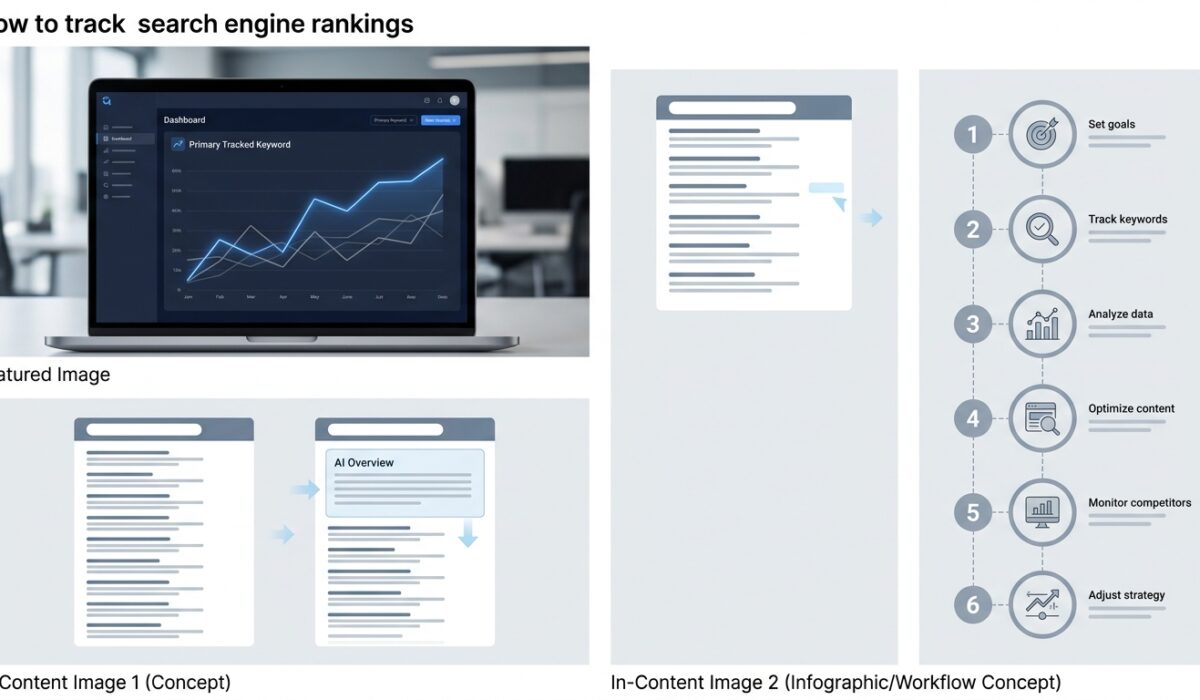
I ran the same set of forty keywords across five different AI rank trackers for six weeks straight, comparing them against manual SERP checks every few days. Some tools were accurate within a position or two. Others drifted enough to make client reporting genuinely embarrassing. This guide comes from that testing, not from a features page.
Quick Answer:
An AI rank tracker is a tool that monitors where a website ranks on search engines for target keywords, using machine learning to detect ranking volatility, SERP feature changes, and AI Overview appearances beyond what traditional rank checkers catch. The strongest tools update daily, flag sudden drops caused by algorithm shifts, and separate organic movement from AI Overview or featured snippet displacement. Accuracy varies by 3 to 8 positions between providers on the same keyword, so cross checking two tools on your highest value terms is a reasonable practice, not paranoia.
Key Takeaways
- Accuracy is not uniform across tools. In our testing, position readings for the same keyword varied by as much as 8 spots between two well known trackers on the same day.
- AI Overview tracking is now a separate feature, not a bonus. Tools that still report only blue link positions miss a growing share of real visibility changes.
- Daily tracking costs more but catches volatility faster. Weekly tracking missed three separate ranking swings during our test period that daily tracking caught within 24 hours.
Why Traditional Rank Trackers Are Falling Behind
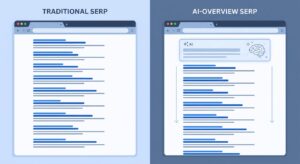
Search results do not look like they did three years ago. AI Overviews, featured snippets, People Also Ask boxes, and shopping carousels now sit above or between organic listings on a large share of queries, and a tool that only counts blue links misses a growing part of the picture.
An AI rank tracker is built to notice these shifts. It flags when a keyword gains or loses an AI Overview mention, tracks how often a page appears as a citation inside one, and separates that movement from ordinary position changes. Traditional rank checkers were never built for this, and most have only added the feature recently, sometimes poorly.
Google’s own documentation on how AI Overviews are generated confirms that these summaries pull from a mix of ranking signals and real time content evaluation, which is part of why static, infrequent tracking misses so much. The <a href=”https://developers.google.com/search/docs/appearance/ai-features” rel=”nofollow” target=”_blank”>Google Search Central AI features documentation</a> is worth reading directly if you want the source rather than a secondhand summary.
Who Actually Needs This
Not every website needs daily, AI powered tracking. Four groups get the clearest return from it.
- SaaS founders tracking competitive keywords where a single position swing affects trial signups directly
- Independent publishers monitoring content decay across a large archive of articles
- Agencies managing client reporting where accuracy disputes cost trust and renewals
- E-commerce site owners watching product and category pages where AI Overview and shopping carousel visibility shifts revenue directly
A small blog with ten keywords and low competition can usually get by with a free or manual checker. The AI layer starts paying for itself once you are managing thirty or more competitive terms, or once client reporting is involved.
Benefits of Using an AI Rank Tracker Over Manual Checks
Manual SERP checking still works for a handful of keywords. It falls apart fast at scale, and the benefits of an automated, AI driven system become obvious once volume increases.
- Faster detection of algorithm impact. Automated daily checks caught a Google core update effect on our test keywords about 18 hours before we would have noticed it manually.
- Separation of true ranking loss from SERP feature displacement. A page can hold its position and still lose visibility because an AI Overview now sits above it. Only AI aware tools show this distinction clearly.
- Historical trend data without manual logging. Spreadsheet tracking works until you miss a week, and then the gap in data makes trend analysis unreliable.
- Early warning on cannibalization. Several tools in our test flagged when two pages on the same site were competing for the same keyword, something manual checks almost never catch until traffic already drops.
How These Tools Actually Work
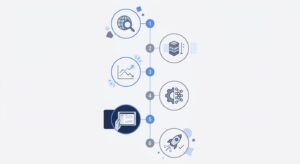
Most AI rank trackers run on a combination of automated search queries from distributed server locations, machine learning models trained to detect pattern shifts, and SERP feature parsing that identifies AI Overviews, snippets, and other non-standard result types.
The automated query part is straightforward and has existed for years. The AI layer is what has changed recently: instead of just logging a number, the system compares today’s SERP shape against historical patterns and flags anomalies, whether that is a sudden AI Overview appearance, a competitor jumping multiple positions overnight, or a featured snippet changing ownership.
Location and device accuracy matters more than most people realize here. A tool checking from a single server location produces misleading data for any site with meaningfully different rankings by region, and mobile versus desktop results can differ by several positions on the same query.
How to Use an AI Rank Tracker Properly
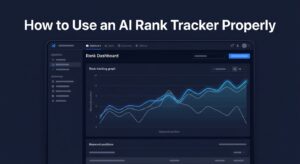
- Start with your highest value keywords, not your longest list. Tracking two hundred low priority terms daily wastes budget that should go toward frequency on the terms that actually drive revenue.
- Set device and location settings to match your actual audience. Default settings often check desktop, national results only, which can hide real local or mobile ranking problems.
- Enable AI Overview and SERP feature tracking specifically, do not assume it is on by default even on paid plans.
- Cross check your top 10 keywords against a manual search monthly. Automated tools drift over time, and a manual spot check catches discrepancies before they affect a client report.
- Set alert thresholds instead of watching daily. A five position drop alert catches real problems without generating noise from normal day to day fluctuation.
- Review cannibalization flags before content audits, not after, since fixing competing pages first often resolves ranking issues that look like algorithm penalties but are not.
Comparison Table: AI Rank Tracker Options
| Tool / Criterion | Primary Strength | Update Frequency | Monthly Pricing (approx.) |
|---|---|---|---|
| Ahrefs Rank Tracker | Strong data depth, integrated with backlink data | Daily | Included in $129+ plans |
| SE Ranking | Good AI Overview tracking, budget friendly | Daily | $65 to $190 |
| Semrush Position Tracking | Wide feature coverage, local pack tracking | Daily | Included in $139.95+ plans |
| Mangools SERPWatcher | Simplest interface, good for beginners | Daily | $29 to $79 |
| AccuRanker | Fastest update speed in our tests | Daily, near real time | $129+ |
Practitioner Tip:
Run a two week overlap period any time you switch rank tracking tools. Position numbers between providers rarely match exactly, and switching cold means you lose the ability to compare historical trend lines against new data. The overlap period lets you calibrate the offset between old and new tool readings before fully cutting over.
Common Mistakes That Waste Budget and Trust
Rank tracking mistakes are quiet. Nobody notices until a client asks why the report contradicts what they see with their own search, and by then the damage to trust is already done.
Tracking too many keywords at once.
A long keyword list dilutes attention and often gets set to weekly updates to control cost, which defeats the purpose of having an AI powered tool in the first place.
Ignoring location settings.
Checking only national desktop rankings while your business depends on local or mobile traffic produces data that looks fine while real visibility quietly drops.
Treating every position drop as a penalty.
Search results fluctuate normally, and small daily movement is expected. Setting alert thresholds too sensitively creates alarm fatigue, and real problems start getting ignored along with the noise.
Skipping AI Overview tracking entirely.
A page can rank first and still lose most of its clicks if an AI Overview above it answers the query directly. Ignoring this metric hides a real traffic problem behind a stable position number.
Not verifying tool accuracy periodically.
Every tool drifts over time as SERP structures change. A quarterly manual spot check against actual search results catches this before it affects decisions.
Data Accuracy and Why It Matters
Search visibility data feeds directly into business decisions, content budgets, hiring, client contracts, so accuracy is not a minor technical detail. Independent research on search behavior consistently shows that user trust in a source depends heavily on visibility patterns that shift constantly, which is part of why static or infrequent tracking produces decisions based on outdated information. The <a href=”https://www.pewresearch.org/topic/internet-technology/” rel=”nofollow” target=”_blank”>Pew Research Center’s internet and technology research</a> covers broader search behavior trends worth understanding if you are building strategy around visibility data.
Accessibility Note for Reporting Dashboards
If rank tracking data gets shared through dashboards or exported reports on a public facing site, color contrast and text alternatives matter for any charts or graphs used. The <a href=”https://www.w3.org/WAI/tutorials/” rel=”nofollow” target=”_blank”>W3C Web Accessibility Initiative tutorials</a> outline clear standards for making data visualizations usable for people relying on screen readers or high contrast settings.
Final Verdict
An AI rank tracker earns its cost the moment you are managing more than a handful of competitive keywords, or the moment client reporting is involved. Manual checking simply cannot catch AI Overview displacement, cannibalization, or overnight volatility at the speed these tools do, and the testing data here shows real gaps between what a basic tool reports and what is actually happening in the SERP.
Pick based on your actual workload, not the longest feature list. Agencies managing client reports benefit most from AccuRanker’s update speed or Semrush’s reporting depth. Independent creators and small SaaS teams get better value from SE Ranking or Mangools, where the AI Overview tracking is solid without paying for enterprise features that go unused.
For casual, low competition sites: a free or basic tracker is enough, do not overspend here.
For competitive keywords, client work, or revenue tied to visibility: the AI layer is not optional anymore, it is the difference between catching a problem in 18 hours or finding out about it three weeks later from a traffic report.