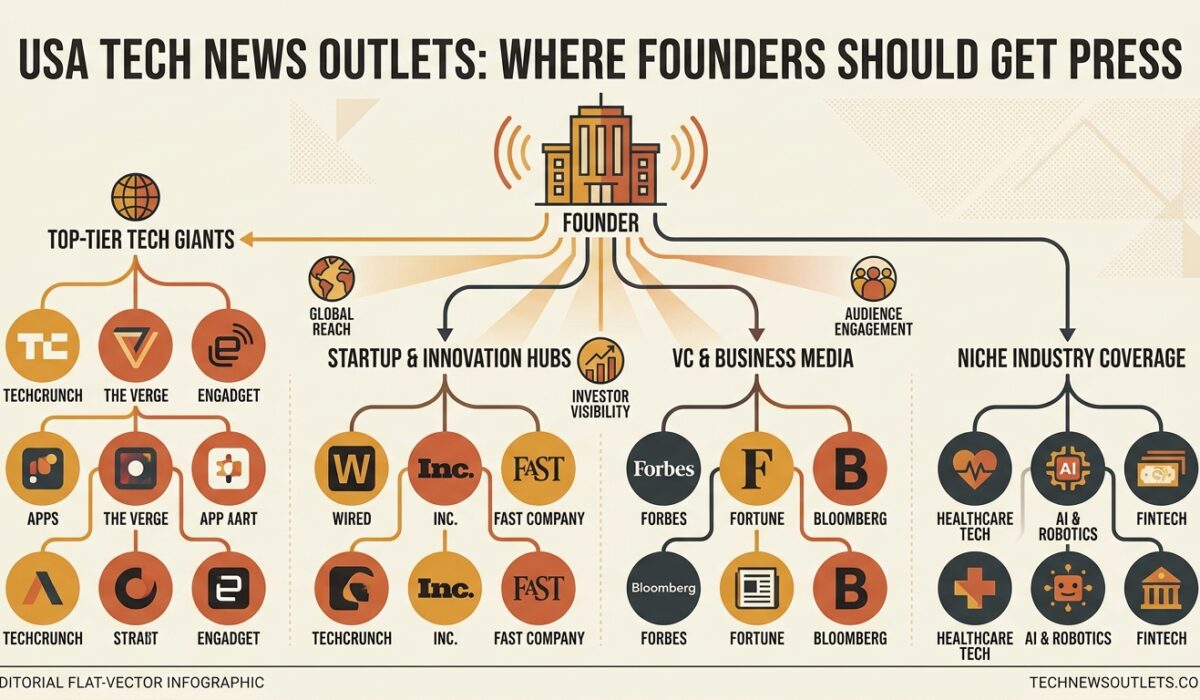
QUICK ANSWER
Searches for “technewsoutlets.com usa” usually come from creators asking one question: which US tech news outlets are worth my time? Judge any outlet on five criteria. First, verifiable audience size from a third-party estimate. Second, named editors and reporters with a visible byline history. Third, a clear correction and contact page. Fourth, whether links to outside sites are editorial or paid. Fifth, whether the outlet’s readers match your buyers. A site that fails two or more of these checks is a poor place to spend pitch time or ad budget, however polished its homepage looks.
KEY TAKEAWAYS
• Audience match beats raw traffic: A small newsletter read by 5,000 SaaS buyers can outperform a general site with 5 million casual visitors.
• Verify before you pitch: Check at least two independent traffic estimates and one manual review of recent articles before you send anything.
• Track outcomes per outlet: Log referral visits, signups, and backlinks for each placement for 90 days, then drop the outlets that produce nothing.
Most creators start this search the same way. Someone mentions a directory or aggregator, they type the domain into Google with “usa” tacked on, and they hope for a quick verdict. I have watched that habit waste weeks of outreach.
The problem is simple. A domain name tells you nothing about quality. An outlet with “tech news” in its URL can be a real newsroom, a one-person blog, a link aggregator, or a thin content farm. You have to look under the hood.
This guide gives you a repeatable method for judging any US tech news source, including the one you searched for. It is written for independent web creators, SaaS founders, and digital publishers who need coverage that moves numbers.
What a US Tech News Outlet Actually Does
Tech outlets fall into four working types. Each sells a different kind of value.
Original reporting sites employ writers who interview sources and verify claims. They are hard to get into and worth the effort. One placement can bring referral traffic and a lasting backlink.
Aggregators collect headlines from other sites. They rarely produce original work. Their value is discovery, since a listing can bring small bursts of visits, but readers seldom trust them the way they trust a reporter’s byline.
Community-ranked sites let readers vote stories up. Developer forums are the classic example. Traffic can spike hard and vanish within a day.
Directories and roundup sites list tools, startups, or outlets in categories. They help with early visibility and basic citation building. Their editorial standards vary a great deal.
Before you spend time anywhere, decide which type you are dealing with. A directory page and a newsroom need completely different pitches.
Why “USA” Matters in the Query
The “usa” part of the keyword carries intent. People adding it usually want US-based coverage for one of three reasons: US customers, US press credibility, or US-focused search rankings.
Geography affects real outcomes. A US reader is more likely to convert on a product priced in dollars, with US payment methods and support hours. A UK or Indian outlet may have a bigger audience but a weaker fit for your funnel.
Check the outlet’s own signals. Look at the currency in its ads, the cities in its reporting, and the language its editors use. If a site claims a US focus but publishes mostly recycled wire copy, treat that claim with suspicion.
The Five-Point Vetting Checklist
I run this list before I put any outlet on a pitch sheet. It takes about 20 minutes per site.
1. Audience size you can verify
Never trust a “monthly visitors” figure printed on the site’s own media kit. Compare at least two third-party estimates. If the numbers differ by more than 3x, the site is either small or hiding something.
Ask for a sample audience breakdown by country and job role. Honest outlets share this. Evasive ones dodge.
2. Real people behind the bylines
Open ten recent articles. Do the authors have profile pages, past work, and social accounts? Can you find an editor’s name?
Anonymous “Admin” or “Staff” bylines on every post are a red flag. So are author photos that reverse-search to stock images.
3. Corrections, contact, and ownership pages
A legitimate outlet tells you who owns it and how to reach a human. It also explains how it handles mistakes. If the About page is a paragraph of vague mission language with no names, move on.
Google’s own guidance stresses this. Its documentation on helpful, people-first content lists expertise, authorship clarity, and trust signals among the things quality evaluators look for.
4. Editorial links versus paid links
This one matters for SEO. A link earned through reporting carries real weight. A link bought through a “sponsored post” package carries risk if it is not labeled properly.
Read a few articles that mention brands. Do they include disclosure language? Do outbound links have sponsored or nofollow attributes where they should? If an outlet sells dofollow links openly on a price list, do not build your strategy on it.
5. Reader fit
Read the comments, the social replies, and the newsletter sign-up copy. Who is talking? Founders, developers, hobbyists, students?
Match that crowd to your buyer. A creator selling a WordPress plugin gains little from an outlet whose readers mostly follow consumer gadget reviews.
Comparing Outlet Types Side by Side
The table below compares the four types on the traits that matter most for placement decisions. It uses general patterns, not measurements of any single site, so verify each outlet yourself.
| Outlet Type | Primary Strength | Typical Traffic Pattern | Cost to Get Featured |
|---|---|---|---|
| Original reporting site | High trust, lasting backlinks | Steady, moderate spike on publish | Free, but needs a strong story |
| Aggregator | Fast discovery | Small, frequent bursts | Often free or low |
| Community-ranked site | Developer attention | Very sharp spike, short life | Free, but no guarantee |
| Directory or roundup | Citation building | Slow, long-tail search visits | Free to paid, varies widely |
Notice the trade-off in the last column. The cheapest options rarely produce the trust that reporting sites deliver, and the trusted ones rarely take pitches without a real news hook.
PRACTITIONER TIP
Before you pay for any listing or sponsored placement, search for the outlet’s name plus “sponsored post” and read the top ten results. You will often find the pricing page, plus complaints from people who paid and saw no traffic. Also check whether the page you would appear on is indexed by Google at all. Search for the exact page URL. If it is missing from results, your link is not counting for much.
Reading Traffic Data Without Fooling Yourself
Traffic estimates are guesses built from panels and models. They work best for large sites and worst for small ones.
Three habits keep you honest. First, compare trend lines, not single numbers. A steady climb over 12 months says more than one big month. Second, look at the split between direct, search, and referral visits. A site living entirely on search traffic can lose half its audience in one algorithm update. Third, watch for sudden cliffs. A drop of 60 percent in a month often points to a penalty or a change in how the site publishes.
Then confirm with your own eyes. Search a few topics the outlet covers and see whether its articles rank on page one. Real authority shows up in search results without any help from the site’s marketing copy.
What US Readers Actually Trust
Trust drives whether a placement converts. It is worth knowing how Americans get and judge news online.
The Pew Research Center news platform fact sheet tracks how US adults use websites, apps, search, social media, and podcasts to get news. Its data shows that habits differ by age group, and that social platforms are a growing route to news for younger adults. For a publisher, that means a story’s life often begins on social, not on the outlet’s homepage.
Use that in planning. If your target buyers are 25 to 40, an outlet with strong social distribution can beat one with a bigger homepage audience. Ask each site how its stories travel.
Writing a Pitch an Editor Will Actually Read
Most pitches die in the first line. Editors get dozens per day and skim for one thing: is this news to my readers?
Keep the structure tight.
Subject line: State the news in under ten words. “New study: 42 percent of indie SaaS sites lose traffic after migration” beats “Exciting product announcement.”
Opening lines: Give the finding or event first. Put your company name second.
Evidence: Include one data point they can verify, a chart, and a named person available for comment.
Close: Offer an exclusive or an embargo if you have one. Then stop.
Never attach a large press kit to a first email. Link to a folder. And never follow up more than twice.
If you have no real news, do not fake it. Publish useful original data on your own site first. Original numbers give editors a reason to cite you, and they give you something worth linking.
Building Pages That Deserve the Coverage
Coverage sends visitors to your site, so your site has to hold them. Many creators win a placement and then lose the visitors to a slow, confusing landing page.
Check three things before any pitch goes out.
Speed and stability. Test the page on a mid-range phone over a normal mobile connection. If it takes more than three seconds to become usable, fix that first.
Accessibility. Readers with disabilities are readers. The W3C’s web accessibility fundamentals guide explains the basics, from text alternatives to keyboard navigation. Good accessibility also improves usability for everyone else, and it lowers legal exposure for US businesses.
A clear next step. Give the visitor one action: sign up, download, or read a case study. Three competing buttons produce zero clicks.
Common Traps When Using Tech News Directories
Some mistakes show up again and again.
Pay-to-list schemes with vague promises. If a service promises “guaranteed press in top US outlets” for a flat fee, ask which outlets, on which dates, with which URLs. Real PR work names its targets.
Duplicate content penalties. Do not submit the same press release text to twenty sites. Search engines treat identical text as low value, and most of those pages will not rank. Write a distinct angle for each outlet.
Chasing one big hit. A single feature feels great and then fades. Plan for a run of smaller placements across relevant niche sites, spaced over months.
Ignoring attribution. Tag every link you control with campaign parameters. Without them, you cannot tell which outlet sent the visitors who actually bought.
Skipping the contract details. If you buy sponsored content, get in writing whether the link is labeled, how long it stays live, and what happens if the page is removed.
A 90-Day Measurement Plan
You need numbers to decide where to keep investing. Here is a simple plan.
Days 1 to 14: Build your shortlist of ten outlets using the checklist. Drop any that fail two or more checks.
Days 15 to 45: Send tailored pitches to the top five. Publish one original data piece on your own site to support them.
Days 46 to 75: Record results for every placement: referral visits, signups, new backlinks, and branded search growth.
Days 76 to 90: Compare outlets by cost per signup and by backlink quality. Cut the bottom half. Reinvest in whatever worked.
Repeat the cycle every quarter. Outlets change owners, standards, and audiences, so last year’s winner can be this year’s dead end.
So Where Does technewsoutlets.com Fit?
Run the same five checks on it that you would run on any outlet. Look for named editors, third-party traffic estimates, disclosure of paid content, and audience details. Read ten recent articles and decide whether your buyers would care.
If it passes, add it to your list with a specific goal and a 90-day review date. If it fails, spend that pitch time on a niche newsletter or a developer community where your buyers already gather.
No domain deserves trust because of its name. Evidence earns it.
Frequently Asked Questions
Is a bigger outlet always better for a startup?
No. Bigger outlets have more readers but far more competition for attention. A niche outlet aligned with your buyers often produces better signups per placement.
Do nofollow links help at all?
Yes. They can send referral traffic, build brand recognition, and lead to later editorial links from writers who found you. Do not count on them for direct ranking gains.
How many outlets should I target at once?
Five to ten is manageable for a solo founder. More than that and your pitches turn generic.
Should I pay for sponsored posts?
Only if you accept the placement as advertising. Label it properly, measure the result, and avoid treating it as a shortcut to authority.