
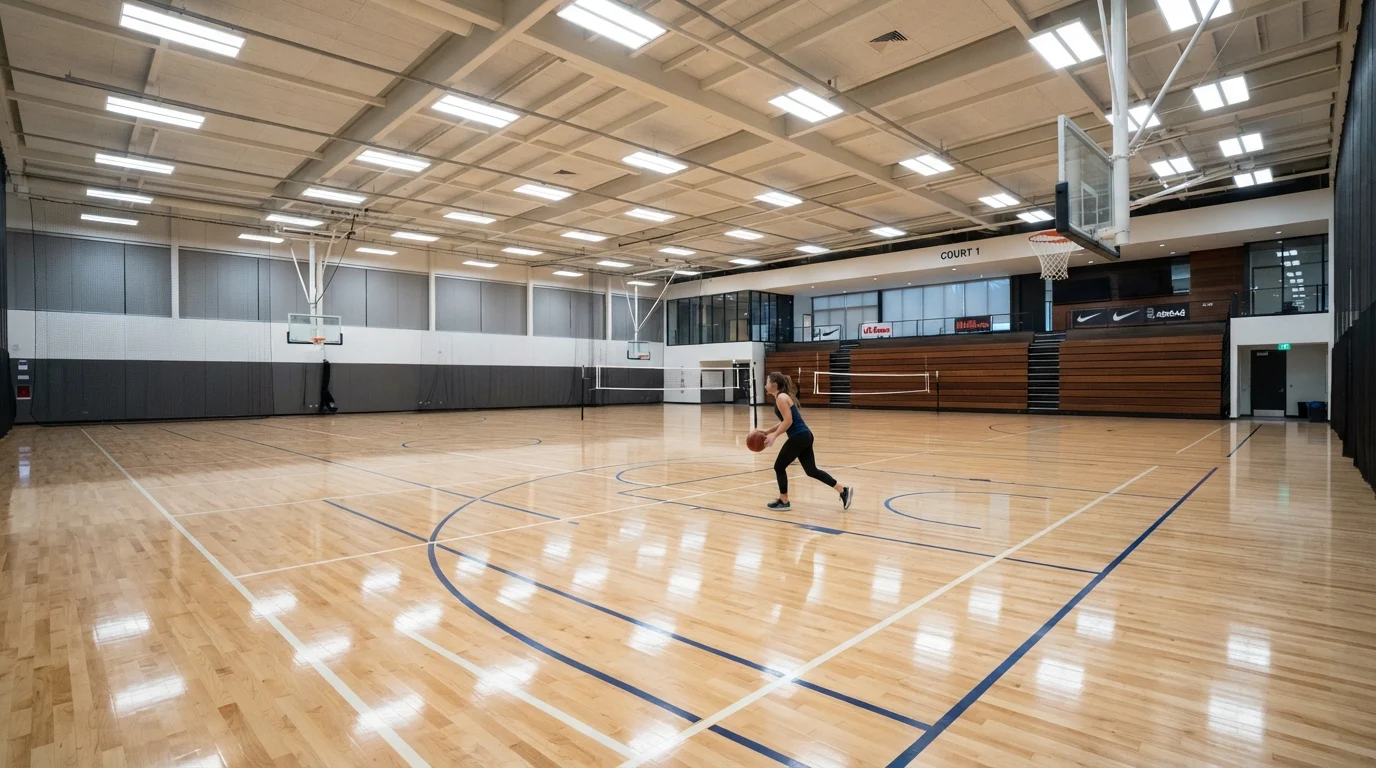
LED Panel Lights are a popular lighting choice for offices, schools, hospitals, retail stores, and modern homes. Their flat design provides a clean appearance, while the wide light output helps illuminate rooms without taking up much ceiling space. They are also a common replacement for older fluorescent ceiling fixtures.
However, not every panel light is suitable for every room. Size, brightness, color temperature, mounting style, and ceiling type all affect the final result. Some spaces need bright, even lighting for daily work, while others need softer light for a more comfortable environment.
What Are LED Panel Lights?
LED panel lights are flat lighting fixtures that use light-emitting diodes (LEDs) to produce illumination. They usually have a slim rectangular or square shape and a diffuser that spreads light across the front of the fixture.
Unlike traditional bulbs, which produce light from a smaller point, panel lights distribute illumination over a wider surface. This makes them useful in rooms where consistent ceiling lighting is important.
Most models are designed for recessed installation in suspended ceilings, but surface-mounted and suspended options are also available.
LED panel lights are commonly used in offices, classrooms, conference rooms, hospitals, shops, and other indoor spaces. They can replace older fluorescent troffer fixtures and provide a cleaner ceiling appearance.
Where Are LED Panel Lights Used?
The simple design and wide light distribution make these fixtures suitable for different indoor applications.
- Offices: They provide general lighting for desks, meeting rooms, and workstations.
- Schools and classrooms: Even illumination helps create a comfortable environment for reading and studying.
- Hospitals and clinics: They provide consistent lighting in patient rooms, examination areas, and corridors.
- Retail stores: They help illuminate products, shelves, and shopping areas.
- Conference rooms: Their flat design works well with modern ceilings and professional interiors.
- Residential spaces: Smaller panel lights can be installed in kitchens, bedrooms, hallways, and living rooms.
- Commercial buildings: They are useful in reception areas, corridors, break rooms, and shared spaces.
The right fixture depends on room size, ceiling height, the activities performed in the space, and the desired level of brightness.
Benefits of LED Panel Lights
LED panel lights offer several advantages over traditional fluorescent ceiling fixtures. Their design, light quality, and energy performance make them a practical choice for many indoor spaces.
Lower Energy Consumption
LED panel lights generally use less electricity than older fluorescent fixtures while providing comparable light output. This can help reduce electricity bills, especially in offices, schools, and commercial buildings where lights stay on for several hours each day.
Even Light Distribution
One of the main reasons people choose panel lights is their wide light output. The diffuser spreads illumination across the fixture instead of producing a concentrated beam.
This helps reduce harsh lighting and makes the room feel more evenly lit.
Longer Operating Life
LED fixtures generally last longer than traditional fluorescent lamps. This means fewer replacements and less maintenance over time.
It is particularly useful in commercial buildings where changing ceiling lights can take time and interrupt daily activities.
Clean and Modern Appearance
The flat design gives ceilings a neat and simple appearance. Slim panels fit well in modern offices, hospitals, schools, and homes.
They are also available in different shapes and sizes to match various ceiling designs.
Instant-On Lighting
LED panel lights reach full brightness immediately after switching on. Unlike some traditional lighting technologies, they do not need a warm-up period.
This makes them convenient for offices, classrooms, meeting rooms, and other frequently used spaces.
Dimming Options
Some LED panel lights support dimming. This allows users to adjust brightness according to the activity or time of day.
For example, a conference room may need bright lighting during presentations but softer illumination during video meetings.
Edge-Lit vs. Direct-Lit LED Panel Lights
Edge-lit and direct-lit are two common panel light designs. Both provide broad illumination, but their internal construction is different.
| Feature | Edge-Lit Panels | Direct-Lit Panels |
| LED position | Around the edges | Behind the diffuser |
| Design | Very slim | Usually thicker |
| Light output | Depends on design | Often suitable for higher output |
| Appearance | Clean and thin | Slightly deeper |
| Installation | Useful for shallow ceiling spaces | Requires more ceiling depth |
| Common use | Modern offices and interiors | Commercial spaces and classrooms |
Choose edge-lit panels when a slim fixture is important. Direct-lit models are worth considering when you need higher light output or a different balance of cost and performance.
Do not assume one design is always more efficient. Compare the actual lumens per watt and lighting specifications of each fixture.
How to Choose the Right LED Panel Lights
Before purchasing, consider how the room will be used. The right size and brightness can make a noticeable difference in the quality of indoor lighting.
- Select the Correct Panel Size
Start by checking your ceiling dimensions and installation requirements.
- 2×4 panels are commonly used in large commercial ceiling grids.
- 2×2 panels work well in smaller grid sections.
- 1×4 panels are suitable for narrow ceiling layouts.
- Round and square panels are common in recessed residential applications.
Measure the available ceiling opening before ordering. A fixture’s advertised size may not be its exact physical dimensions.
- Check Wattage and Lumens
Wattage measures electricity consumption, while lumens measure light output.
When comparing different LED panel lights, always check the lumen rating. A fixture with higher wattage does not automatically provide better brightness.
Consider the room size, ceiling height, furniture arrangement, and amount of natural light. These details help determine how many fixtures you need.
For larger offices or commercial buildings, a lighting calculation can help avoid installing too many or too few panels.
- Choose the Right Color Temperature
Color temperature affects the appearance of indoor lighting. It is measured in Kelvin (K).
Common options include:
- 3000K: Warm white light that creates a softer and more relaxed atmosphere.
- 3500K: A balanced white appearance that works well in many indoor environments.
- 4000K: Neutral white light, commonly used in offices, classrooms, and commercial buildings.
- 5000K: Cooler white light that suits some workshops and task-focused areas.
For most general office environments, 4000K is a practical starting point. However, the best choice depends on the room’s purpose and the preferences of its users.
- Check Color Rendering (CRI)
Color Rendering Index, or CRI, measures how accurately a light source shows colors compared with natural light.
A higher CRI generally provides more natural-looking colors.
For general offices and commercial spaces, CRI 80 or higher is a common starting point. Areas where accurate color recognition matters may benefit from higher CRI fixtures.
This is especially important in retail displays, design studios, and certain healthcare environments.
- Consider Glare Control
Bright ceiling lights can become uncomfortable when they create glare, especially when people work on computers for long periods.
Look for panels with suitable diffusers and glare-control features. Some commercial fixtures provide UGR ratings that help designers evaluate discomfort glare.
The right fixture should provide enough brightness without making the room uncomfortable.
- Check Dimming and Electrical Compatibility
If you want adjustable brightness, make sure the panel and its LED driver support the same dimming system.
Common commercial options include 0-10V dimming and DALI controls.
Also check the input voltage, driver quality, and compatibility with existing switches or control systems before installation.
Final Thoughts
LED panel lights are a practical choice for offices, schools, hospitals, retail stores, and modern homes. They provide even illumination, have a clean appearance, and generally require less maintenance than older fluorescent fixtures.
Before choosing a panel, check its size, lumen output, color temperature, CRI, mounting style, and dimming compatibility. These details will help you select a fixture that fits your ceiling and provides the right amount of light.
Whether you are replacing old fluorescent fixtures or planning lighting for a new building, choosing the right LED panel lights can improve the comfort and appearance of your indoor space.